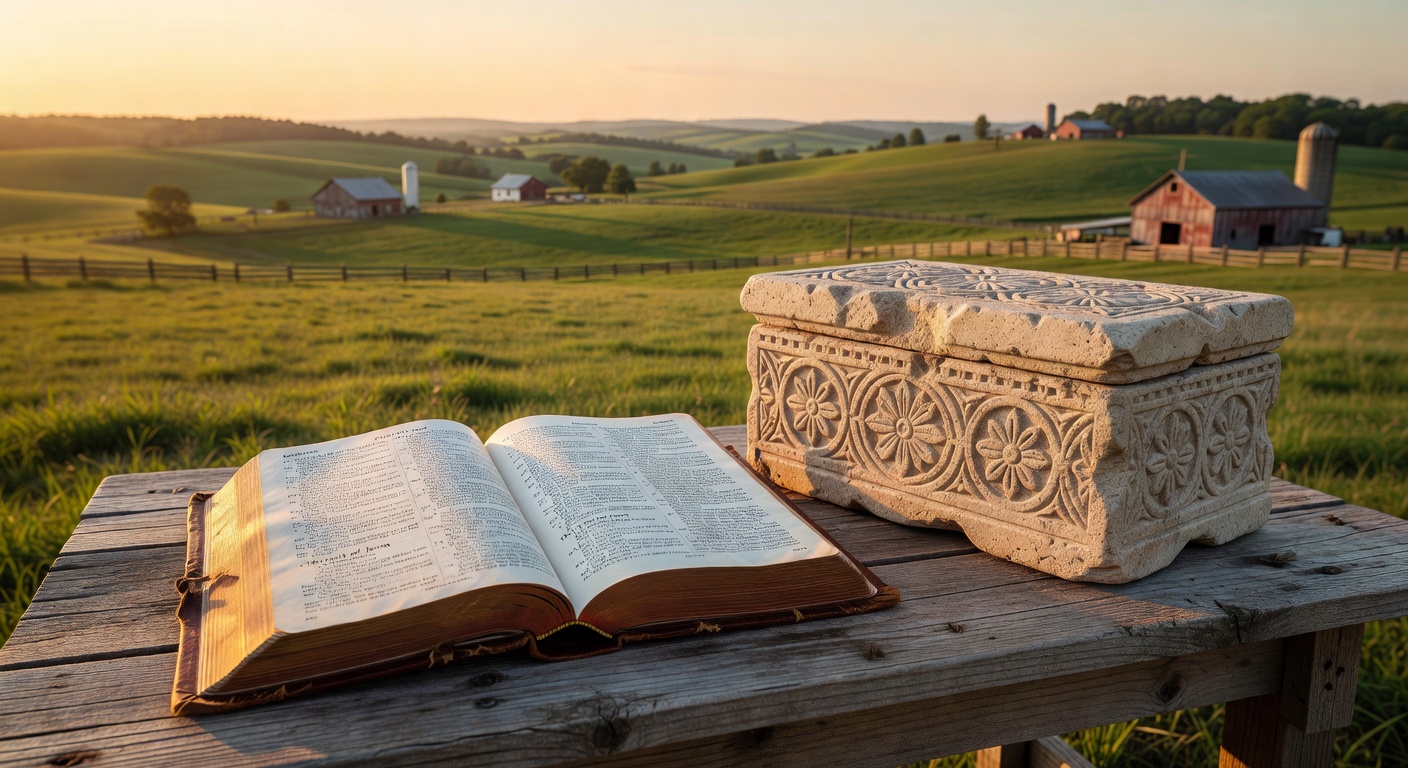
At Victory Baptist Church in Carthage, Missouri—in the heart of Jasper County in beautiful Southwest Missouri—we hold fast to this truth: the Bible records real events that happened in real places to real people. One of the most direct archaeological connections to the Passion of Jesus Christ is the Caiaphas Ossuary, a beautifully carved 1st-century limestone bone box that bears the name of the very High Priest who condemned our Lord to death. For believers across Carthage, Joplin, and the rolling hills of Jasper County, this ancient artifact is far more than a museum piece. Moreover, it stands as a powerful witness that the Gospels are rooted in verifiable history, strengthening our faith as we gather to worship the risen Savior each Lord’s Day.
The Caiaphas Ossuary: Archaeological Link to the High Priest Who Condemned Jesus
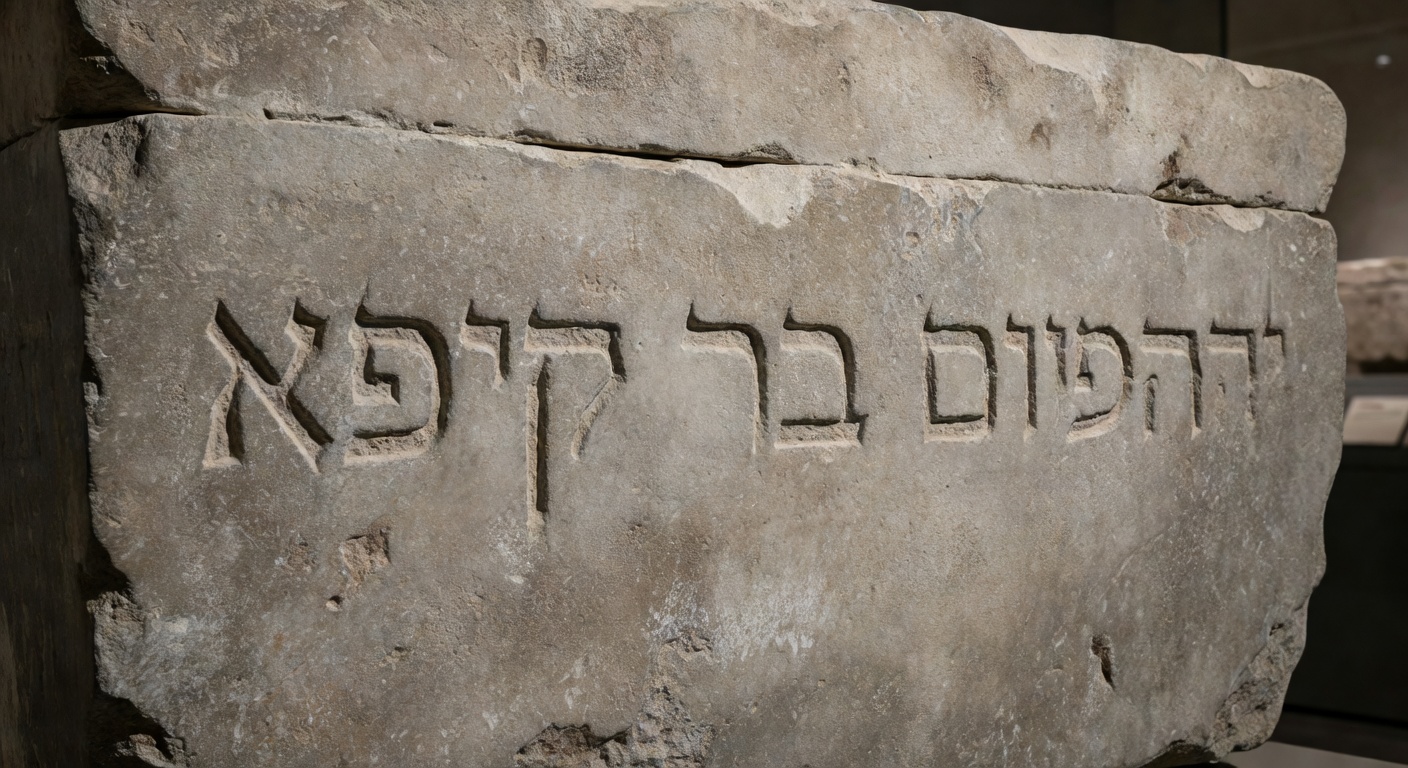
In November of 1990, construction workers paving a road in the Peace Forest south of Jerusalem’s Old City made an accidental discovery that would thrill biblical scholars and strengthen the faith of Christians around the world. A bulldozer broke through the roof of an ancient rock-hewn family tomb, revealing a burial cave from the time of Jesus. When the Israel Antiquities Authority arrived to excavate, they found twelve limestone ossuaries — bone boxes used in first-century Jewish secondary burial practices. One of them, ornately decorated and clearly belonging to a family of high status, carried two Aramaic inscriptions naming “Yehosef bar Qayafa” — Joseph, son of Caiaphas.
For the congregation of Victory Baptist Church in Carthage, Missouri, and for Bible-believing Christians throughout Jasper County and Southwest Missouri, this discovery is deeply meaningful. It provides one of the strongest extra-biblical confirmations of a named figure who appears prominently in the Gospel accounts of Jesus’ trial and crucifixion. The Caiaphas Ossuary does not merely prove that a man named Caiaphas existed; it places us in the very room where the religious leaders of Jerusalem deliberated the fate of the Son of God.
The 1990 Discovery in Jerusalem’s Peace Forest
Accidental Find During Road Construction
The tomb was located in an area known as the Peace Forest, just south of the Old City near what is today the North Talpiot neighborhood. Archaeologists Zvi Greenhut of the Israel Antiquities Authority and Ronny Reich, who studied the inscriptions, conducted a careful salvage excavation. The cave was a typical loculi tomb of the late Second Temple period, with four burial niches cut into the rock. Inside were twelve ossuaries, six of which showed signs of having been disturbed in antiquity or more recently.
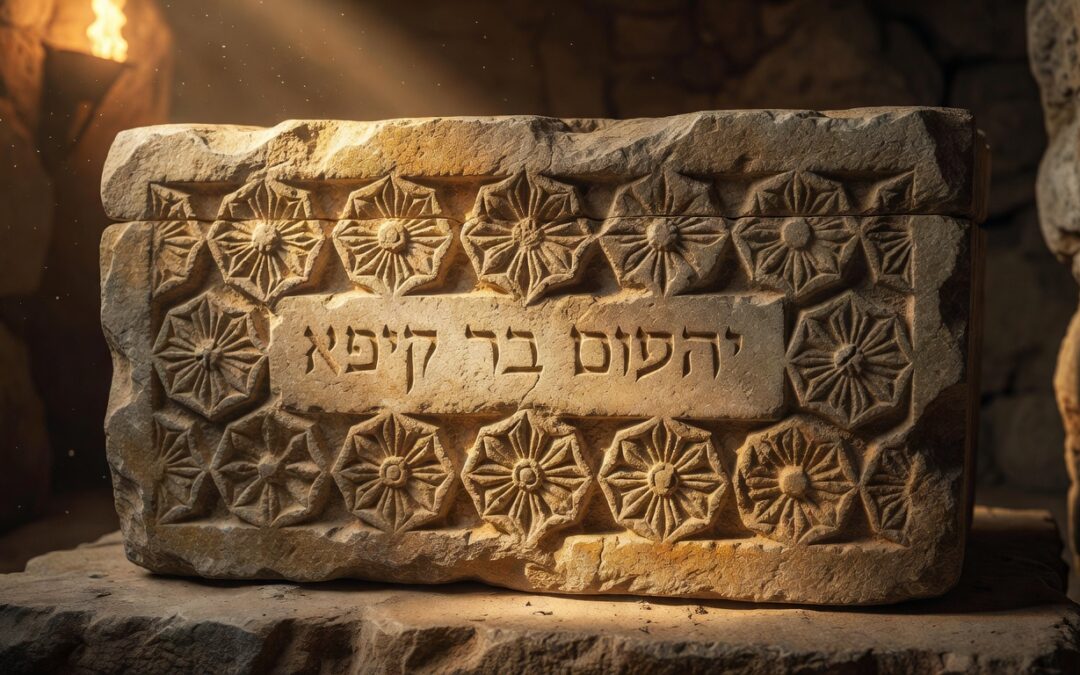
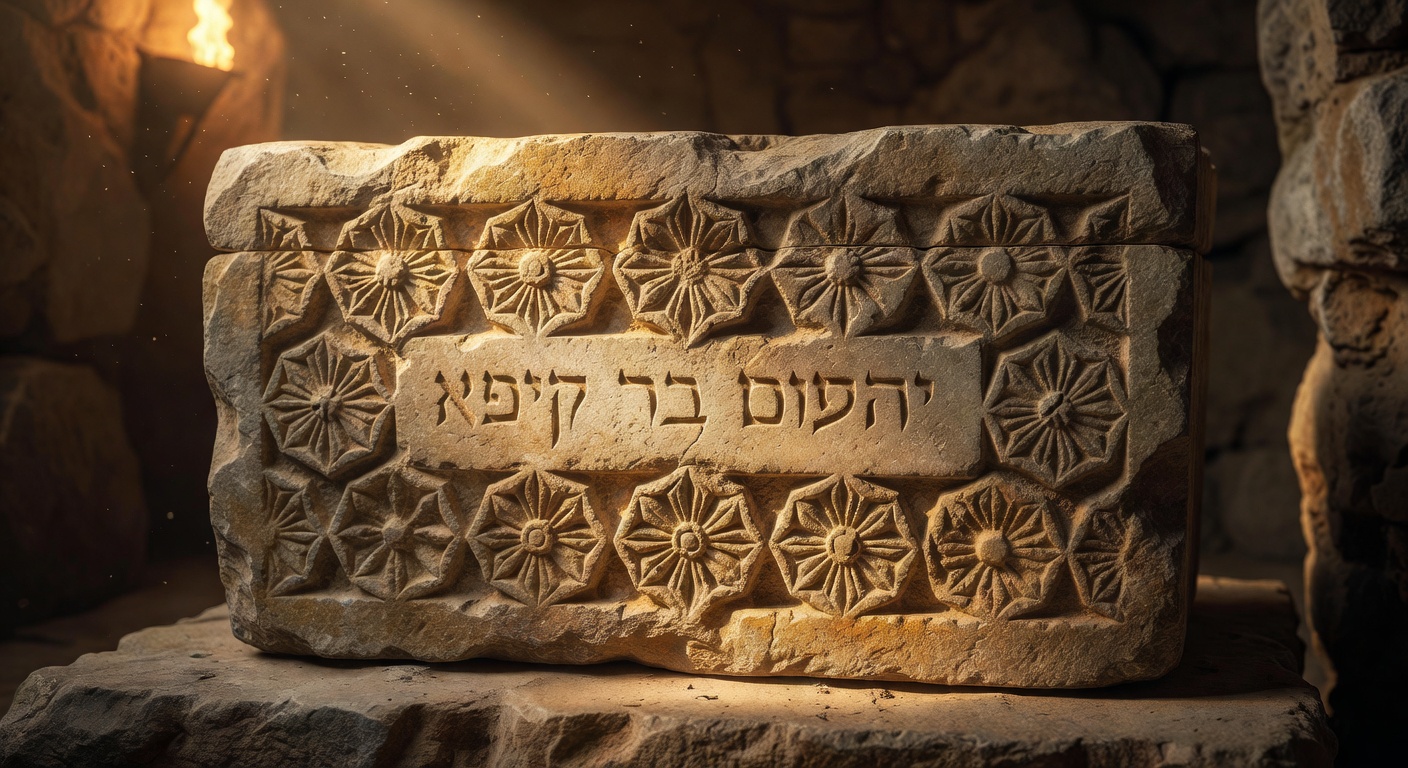
Among the ossuaries, one stood out for its size, decoration, and inscriptions. Measuring approximately 75 centimeters long and 37 centimeters high, the limestone box was adorned with beautifully carved rosettes and still bore traces of bright orange paint — signs of wealth and care in its original preparation. On one of the long sides was written in clear Aramaic letters “Yehosef bar Qayafa.” On a narrow end appeared the shorter form “Yehosef bar Qafa.”
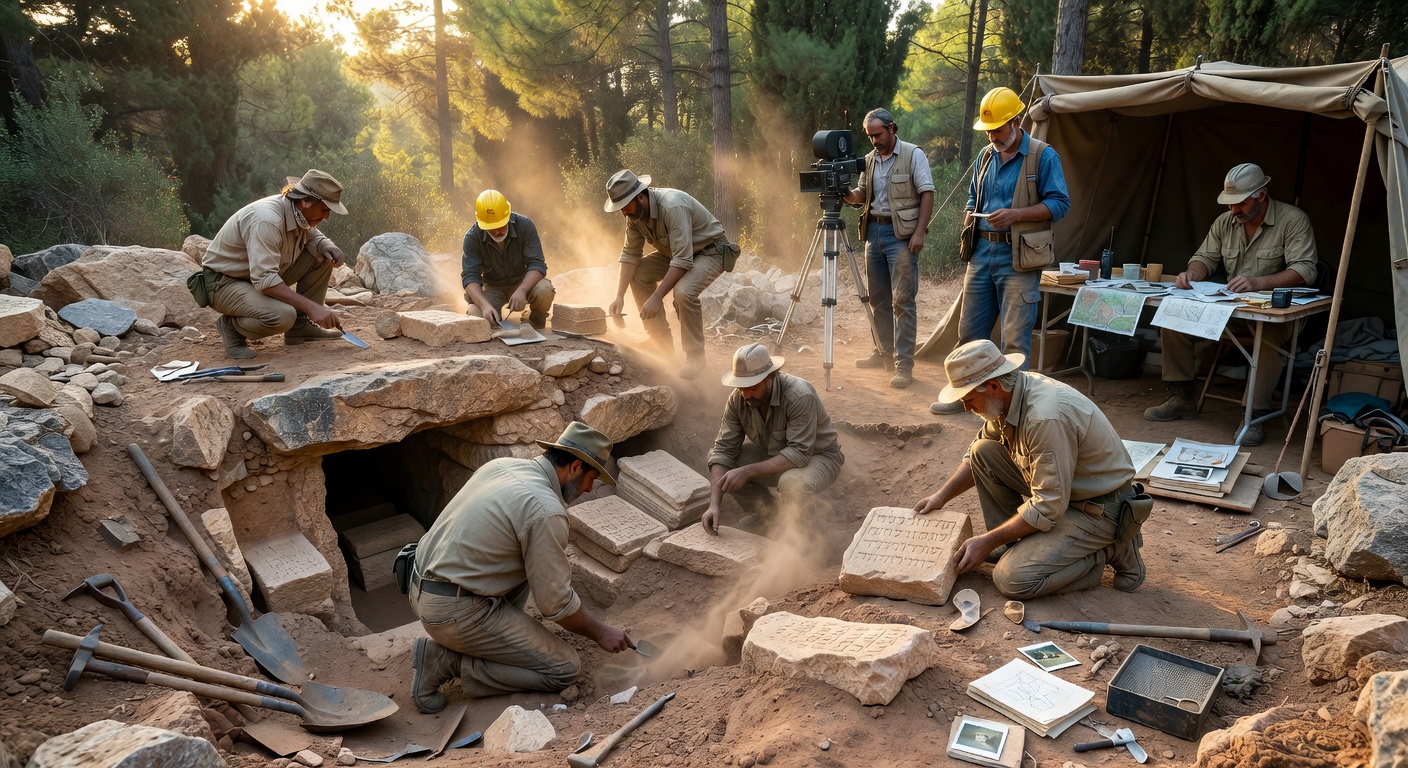
The 1990 discovery of the Caiaphas family tomb during road construction in Jerusalem’s Peace Forest
The bones inside this particular ossuary belonged to six individuals: a man approximately sixty years old, a woman, two teenage boys, and two infants. The sixty-year-old male is widely regarded by scholars as the most likely candidate for the biblical Caiaphas himself or a very close family member. Given that Caiaphas served as High Priest from around A.D. 18 until A.D. 36 or 37, a man of that age in the mid-first century fits the timeline perfectly.
Here at Victory Baptist Church in Carthage, Missouri, we often remind one another that archaeology is not our savior — Jesus is. Yet when the stones of the Holy Land cry out in agreement with the Scriptures we preach from our pulpit every Sunday, our hearts are encouraged. The same God who preserved the record of Caiaphas in the pages of the New Testament also preserved this stone box for modern eyes to see.
The Ossuary and the Inscription That Bears His Name
The Aramaic Inscription “Yehosef bar Qayafa”
Ossuaries were commonly used by Jewish families in Jerusalem during the first century before the destruction of the Temple in A.D. 70. After a body decomposed in a loculus niche, the bones were collected and placed in a decorated stone box for permanent secondary burial. The practice was especially common among wealthier families who could afford fine limestone boxes carved with rosettes, geometric designs, and occasionally inscriptions.
The Caiaphas ossuary is among the more elaborate examples known from this period. Its decoration and the quality of the stone speak of a prominent priestly family with significant resources and social standing — exactly what we would expect for the household of the High Priest.
The Aramaic inscription “Yehosef bar Qayafa” — Joseph son of Caiaphas — on the 1st-century ossuary
The name “Caiaphas” appears to have functioned as a family or clan name rather than a personal name alone. Josephus, the first-century Jewish historian, refers to the High Priest as “Joseph who was called Caiaphas.” The ossuary inscription matches this usage precisely. While the box does not explicitly say “High Priest,” the combination of the rare name, the ornate quality of the ossuary, the location of the tomb in an elite Jerusalem burial area, and the dating all align powerfully with the biblical and historical Caiaphas.
In 2011, another ossuary bearing the Caiaphas family name surfaced from the antiquities market and was authenticated by experts. It reads in part “Miriam daughter of Yeshua son of Caiaphas, priest of Ma’aziah from Beth ‘Imri.” This find links the family to one of the twenty-four priestly divisions established by King David and recorded in 1 Chronicles 24. The connection between the Caiaphas of the Gospels and a known priestly lineage is now even stronger.
Caiaphas in the New Testament and Josephus
The Gospels introduce us to Caiaphas by name and by office. In Matthew 26:3 we read, “Then the chief priests and the elders of the people gathered in the palace of the high priest, whose name was Caiaphas.” He is identified as the High Priest who, together with his father-in-law Annas, exercised significant power during the final years of Jesus’ earthly ministry and throughout the events leading to the crucifixion.
The Gospel of John provides additional theological insight. In John 11:49-52, Caiaphas declares to the Sanhedrin, “You know nothing at all. Nor do you understand that it is better for you that one man should die for the people, not that the whole nation should perish.” The apostle John notes that Caiaphas did not say this of his own accord, but as High Priest he prophesied that Jesus would die for the nation — and not for the nation only, but to gather into one the children of God who are scattered abroad.
“And they led him to Caiaphas the high priest, where the scribes and the elders had gathered.” — Matthew 26:57
Josephus confirms the historical Caiaphas in his Antiquities of the Jews. He records that Caiaphas, whose full name was Joseph son of Caiaphas, was appointed High Priest by the Roman prefect Valerius Gratus around A.D. 18 and served until he was deposed by Lucius Vitellius in A.D. 36 or 37. He was the son-in-law of Annas, who had previously held the office and continued to wield influence behind the scenes. This matches the New Testament portrait exactly.
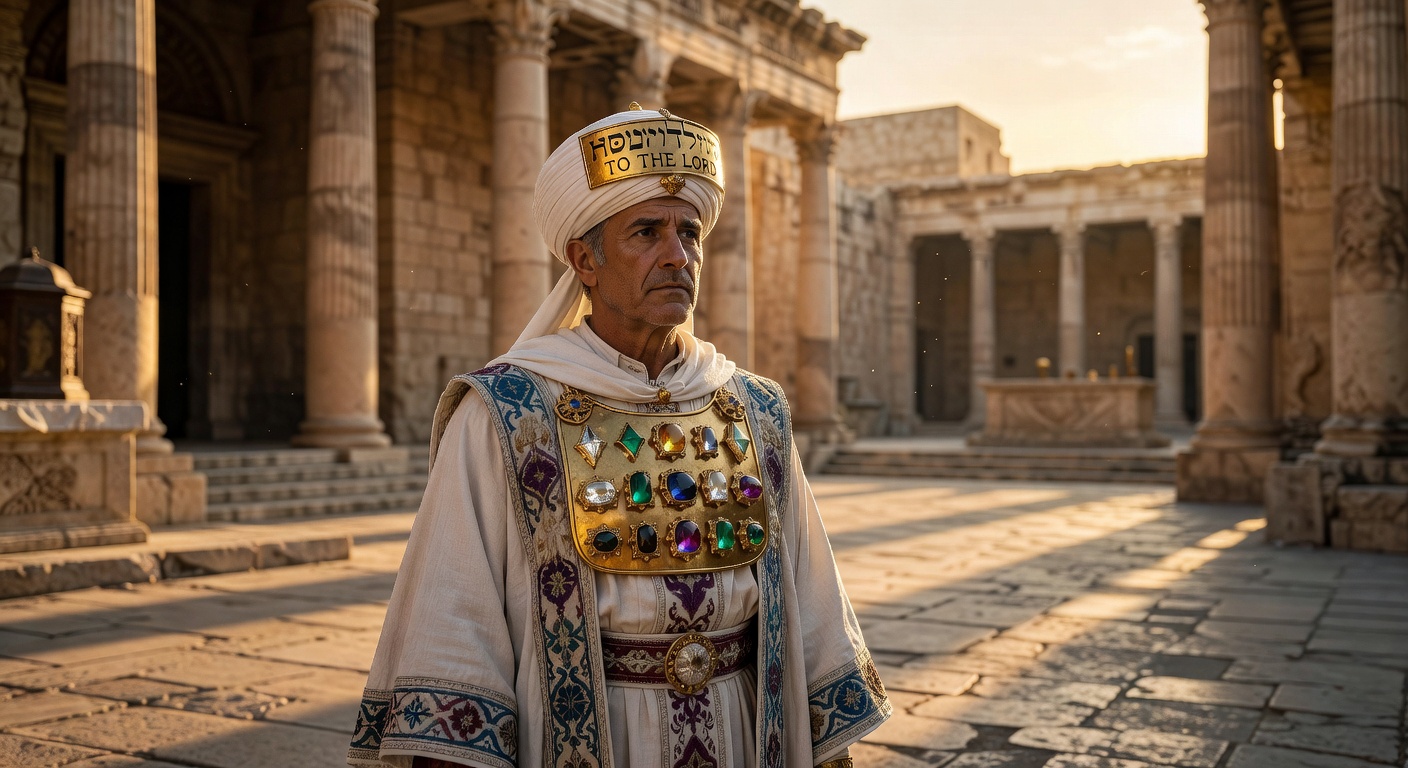
Joseph Caiaphas, the High Priest whose name is now archaeologically attested on the ossuary discovered in 1990
At Victory Baptist Church in Carthage, Missouri, we preach through the Gospels verse by verse. When we reach the passion narratives, the Caiaphas Ossuary gives our people a concrete picture of the man who sat in judgment over Jesus. It removes any notion that the trial accounts are later legendary inventions. The High Priest named in Scripture was a real historical figure whose family tomb has now been found.
The Night Jesus Stood Before Caiaphas
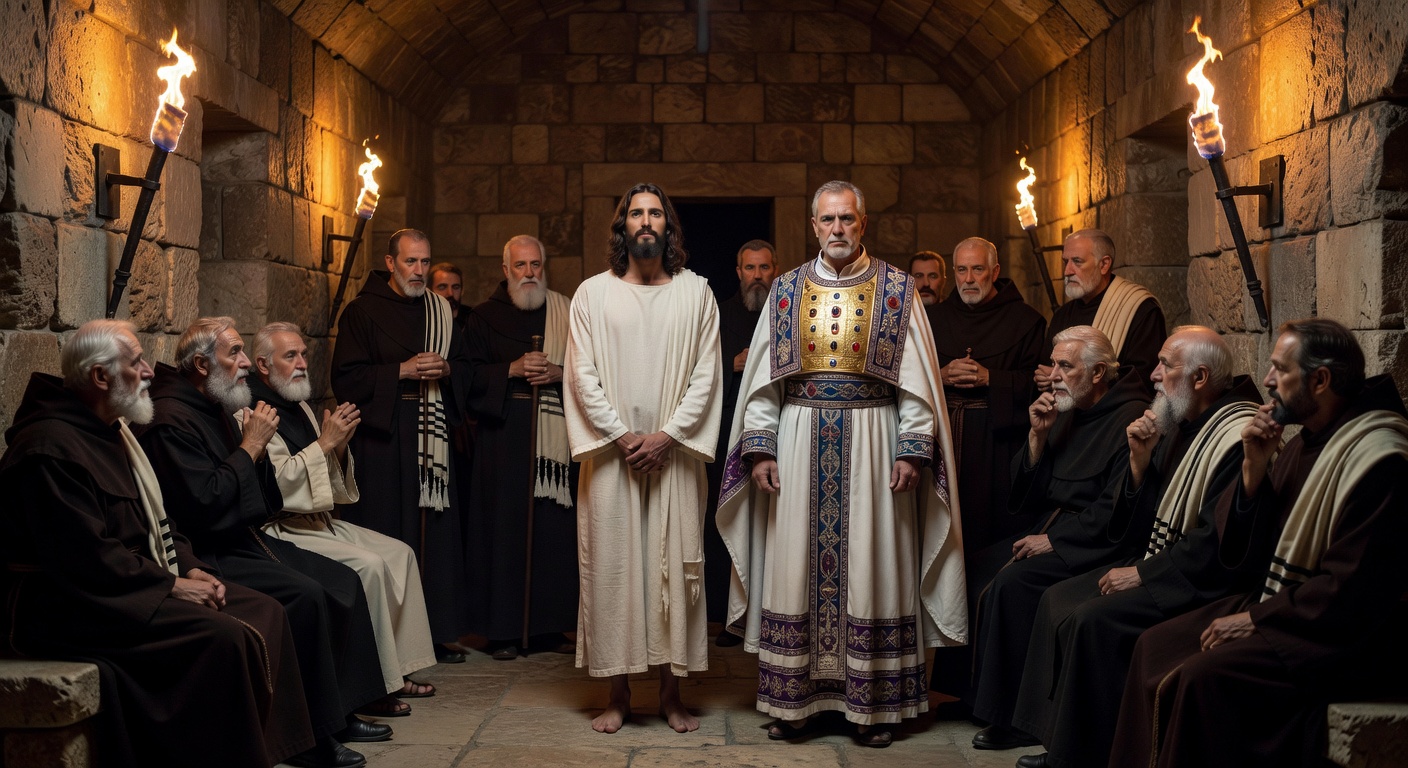
The Gospels give us a sobering account of the events in Caiaphas’ house. After soldiers arrested Jesus in Gethsemane, they took Him first to Annas and then to Caiaphas. The Sanhedrin—the highest Jewish council—had gathered, even in the middle of the night. Therefore the council brought forward false witnesses. Jesus remained largely silent until Caiaphas placed Him under oath: “I adjure you by the living God, tell us if you are the Christ, the Son of God” (Matthew 26:63).
The Midnight Arrest and the Council’s Gathering
Jesus answered with the words that sealed His fate in the eyes of the council: “You have said so. But I tell you, from now on you will see the Son of Man seated at the right hand of Power and coming on the clouds of heaven.” Caiaphas tore his robes in a dramatic display of outrage and declared the charge of blasphemy. The council condemned Jesus to death.
Of course, only the Romans could carry out capital punishment. By morning, Jesus stood before Pontius Pilate. In addition, it was Caiaphas and the religious leadership who had orchestrated the events that led to the cross. The very man whose name is etched on this ossuary played a central role in the greatest injustice in human history — an injustice God sovereignly used to accomplish our redemption.
The solemn night when Jesus stood before Caiaphas the High Priest, as recorded in the Gospels
For the people of our church family in Jasper County, these scenes are not distant ancient history. They are the very foundation of our hope. The High Priest who condemned Jesus did not realize that he was fulfilling prophecy and advancing the plan of salvation. The bones that once rested in that ornate ossuary belonged to a man who unknowingly participated in the greatest act of love the world has ever known.
Scholarly Consensus and the Strength of the Evidence
Authenticity and Identification Debate
Unlike some controversial artifacts that have appeared on the antiquities market without clear provenance, the Caiaphas Ossuary was discovered in a controlled archaeological excavation with impeccable documentation. The Israel Antiquities Authority oversaw every step. There has never been a serious scholarly challenge to its authenticity or first-century dating.
Debate centers not on whether the ossuary is genuine, but on whether the sixty-year-old man whose bones it contained was precisely the High Priest Caiaphas of the Gospels or another member of the same prominent family. The absence of the title “High Priest” on the inscription leaves a small measure of uncertainty. However, the overwhelming majority of archaeologists and New Testament scholars accept the identification as highly probable. The name is rare, the social status matches, the location and date are perfect, and supporting evidence from the 2011 ossuary strengthens the family identification.
This stands in contrast to artifacts whose authenticity remains disputed. The Caiaphas Ossuary is routinely cited in scholarly literature as one of the most significant archaeological confirmations of a New Testament personality. It joins the Pilate Stone, the Erastus inscription, the Gallio inscription, and other finds that anchor the biblical narrative in the real world of the first century.
Why the Caiaphas Ossuary Matters to Believers in Carthage, Missouri
Why should a limestone box discovered in Jerusalem in 1990 matter to farmers, teachers, nurses, retirees, and young families worshiping at Victory Baptist Church in Carthage, Missouri? Because our faith is not built on myths or moral fables. It is built on the historical reality that Jesus of Nazareth was truly tried, crucified, buried, and raised from the dead in first-century Judea under the governorship of Pontius Pilate and during the high priesthood of Caiaphas.
When we sing “The Old Rugged Cross” or “How Deep the Father’s Love for Us” on Sunday mornings in our sanctuary in Jasper County, we are singing about events that actually happened. The Caiaphas Ossuary helps our children and our new believers see that the Bible’s story is not a fairy tale. The man who led the charge against Jesus was a real public figure whose family name and burial practices have now been recovered from the dust of history.
In a culture that increasingly questions the reliability of Scripture, the young people growing up in Southwest Missouri need every reason to trust the Word of God. Archaeology will never replace the work of the Holy Spirit in bringing conviction, but God in His kindness has allowed the earth itself to bear witness. The same God who preserved the bones of Caiaphas’ family also preserved the message of the gospel so that it could reach even the small towns and rural communities of Jasper County, Missouri, two thousand years later.
At Victory Baptist Church in Carthage, Missouri, we rejoice when archaeology confirms the historical truth of the Gospels we preach
Every time we open our Bibles to the passion narratives, we can picture the actual man whose name appears on this ossuary. We can remember that the trial was not a secret event hidden from history. It took place in the public eye of Jerusalem, and the very stones have now testified to the identity of the one who led it.
The Greater Story: From Condemnation to Resurrection
Caiaphas could never have imagined that the man he condemned would rise from the dead three days later. He could not have foreseen that the cross he helped arrange would become the means by which sinners from every nation — including believers in Carthage, Missouri — would be forgiven and reconciled to God.
The apostle Peter, who stood in that courtyard and later preached on the day of Pentecost, declared in Acts 2 that Jesus was “delivered up according to the definite plan and foreknowledge of God.” Caiaphas was a willing participant in the evil that took place that night, yet God sovereignly used it to accomplish the salvation of His people.
This is the message we proclaim at Victory Baptist Church every week: the tomb that held the bones of Caiaphas’ family is empty of power compared to the empty tomb of Jesus. The High Priest who once sat in judgment now stands before the judgment seat of the very One he condemned. And that same risen Lord offers grace and forgiveness to anyone who will repent and believe — whether in first-century Jerusalem or twenty-first-century Jasper County.
The Word of God and the archaeological witness together point us to the risen Christ in Carthage and throughout Southwest Missouri
The Caiaphas Ossuary ultimately points us beyond itself to the living Lord. It confirms the setting. It authenticates the characters. But the power of the gospel is not in the stone — it is in the empty tomb and the ascended King who will one day return.
Studying the Evidence and Growing in Faith
If you are part of our church family or someone exploring the Christian faith in Southwest Missouri, we encourage you to study the Caiaphas Ossuary and other archaeological discoveries for yourself. Excellent resources are available from organizations dedicated to biblical archaeology that present the evidence with both scholarship and faith. Books, museum exhibits (the ossuary is displayed in the Israel Museum in Jerusalem), and reputable documentaries can deepen your confidence in the historical reliability of the New Testament.
At Victory Baptist Church in Carthage, our pastors and teachers are glad to discuss these matters. We do not place our ultimate trust in archaeology, but we thank God when the dirt of the Holy Land confirms what the Bible has always said. The Caiaphas Ossuary is one more reason we can say with the apostle Paul, “I know whom I have believed, and I am convinced that he is able to guard until that day what has been entrusted to me” (2 Timothy 1:12).
Whether you have walked with the Lord for decades in Jasper County or you are just beginning to ask questions about the reliability of Scripture, the message is the same: the Bible can be trusted. The events it records — including the trial before Caiaphas — happened in space and time. And the Savior who was condemned that night is alive today, ready to save all who come to Him in faith.
Explore More Biblical Archaeology at Victory Baptist Church
The Caiaphas Ossuary is one of several powerful archaeological witnesses that confirm the New Testament accounts. Studying these finds helps believers in Carthage, Missouri, Joplin, and across Jasper County and Southwest Missouri see that the Bible is rooted in real history. Here are other discoveries we explore together:
The Pilate Stone — Archaeological proof of Pontius Pilate, the Roman governor at Jesus’ trial.
The Dead Sea Scrolls — Ancient manuscripts that confirm the reliability of the Old Testament Scriptures.
Hezekiah’s Tunnel — A 2,700-year-old engineering marvel described in the Bible, discovered in Jerusalem.
For deeper study from scholars, read the Caiaphas Ossuary entry on Wikipedia and the original excavation reports published by the Israel Antiquities Authority in ‘Atiqot 21 (1992). These resources further illuminate the world of the New Testament.
Frequently Asked Questions About the Caiaphas Ossuary
What is the Caiaphas Ossuary and when was it discovered?
In November 1990, construction workers building a road in the Peace Forest south of Jerusalem’s Old City accidentally broke into an ancient family tomb. Archaeologists from the Israel Antiquities Authority excavated twelve limestone ossuaries. One ornately decorated bone box bore the Aramaic inscription “Yehosef bar Qayafa” — Joseph, son of Caiaphas — the name of the High Priest who presided over Jesus’ trial according to the New Testament.
How does the inscription on the Caiaphas Ossuary connect to the New Testament account of Jesus’ trial?
The Gospels record that Jesus was brought before Caiaphas, the high priest, and the Sanhedrin on the night before His crucifixion (Matthew 26). The ossuary inscription matches the family name of the very man Josephus and the New Testament identify as the high priest during that period. This gives tangible archaeological support to the historical setting of the Passion narrative.
What is the scholarly consensus on whether this is the bone box of the biblical Caiaphas?
Most scholars accept the ossuary as authentic first-century evidence of a prominent priestly family bearing the name Caiaphas. While the inscription does not explicitly say “High Priest,” the combination of the name, the high-status tomb, and the historical timing makes a strong case that the bones belonged to the Caiaphas (or a close family member) mentioned in the Bible. There has never been a serious challenge to its dating or authenticity.
How can the discovery of the Caiaphas Ossuary strengthen faith for believers in Carthage, Missouri, Jasper County, and Southwest Missouri today?
At Victory Baptist Church in Carthage, we believe the Bible records real events that happened to real people in real places. The Caiaphas Ossuary is one more piece of evidence that the trial, crucifixion, and resurrection of Jesus occurred in verifiable history. When we gather on Sunday mornings in Jasper County, we are worshiping the risen Savior whose story is anchored in the same first-century world this stone box came from.
Come Worship With Us at Victory Baptist Church in Carthage, Missouri
We warmly invite you to join us this Sunday at Victory Baptist Church in Carthage, Missouri. You will find a welcoming, Bible-believing family of believers who love the Lord, love His Word, and love the people of Jasper County and all of Southwest Missouri. Whether you are wrestling with questions about the historical reliability of the Gospels or simply looking for a church home where Jesus Christ is exalted and the gospel is preached with clarity and conviction, you are welcome here.
The Caiaphas Ossuary is a stone that speaks. It tells us that the High Priest named in the Gospels was real. But the living Word of God speaks with even greater power: “For our sake he made him to be sin who knew no sin, so that in him we might become the righteousness of God” (2 Corinthians 5:21).
Come hear that message with us. The God who worked through the events of that long-ago night in Jerusalem is still calling sinners to Himself through the finished work of His Son. At Victory Baptist Church in Carthage, we are honored to proclaim the good news of Jesus Christ week after week in Jasper County, Missouri.
Victory Baptist Church Carthage, Missouri Jasper County, Southwest Missouri Preaching the Word • Exalting Christ • Loving Our Community
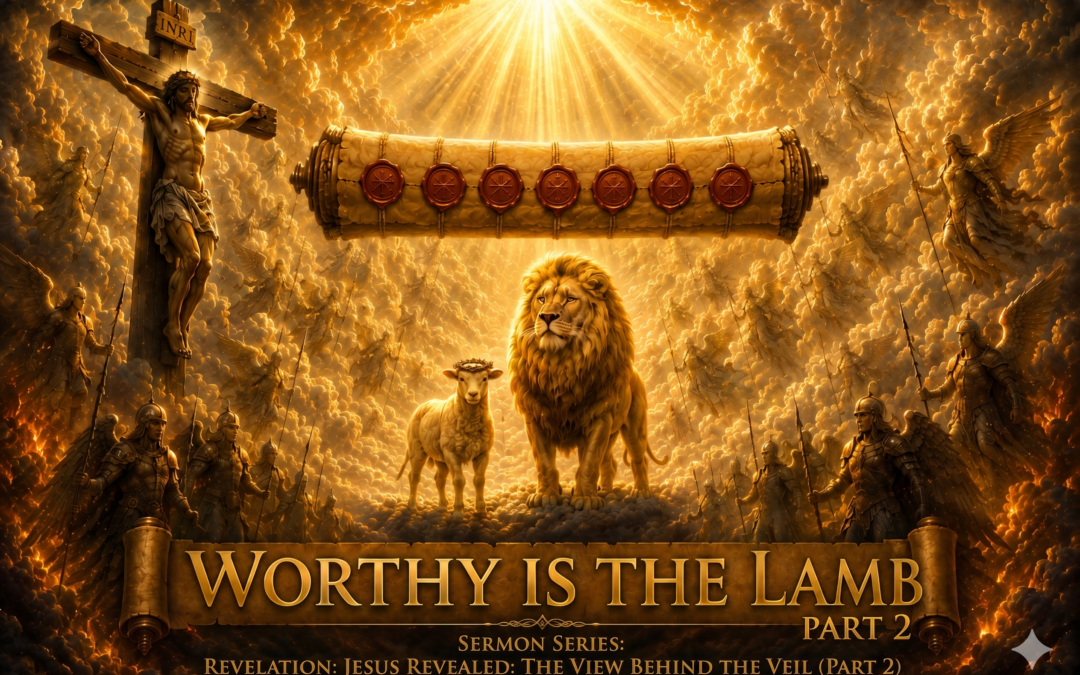
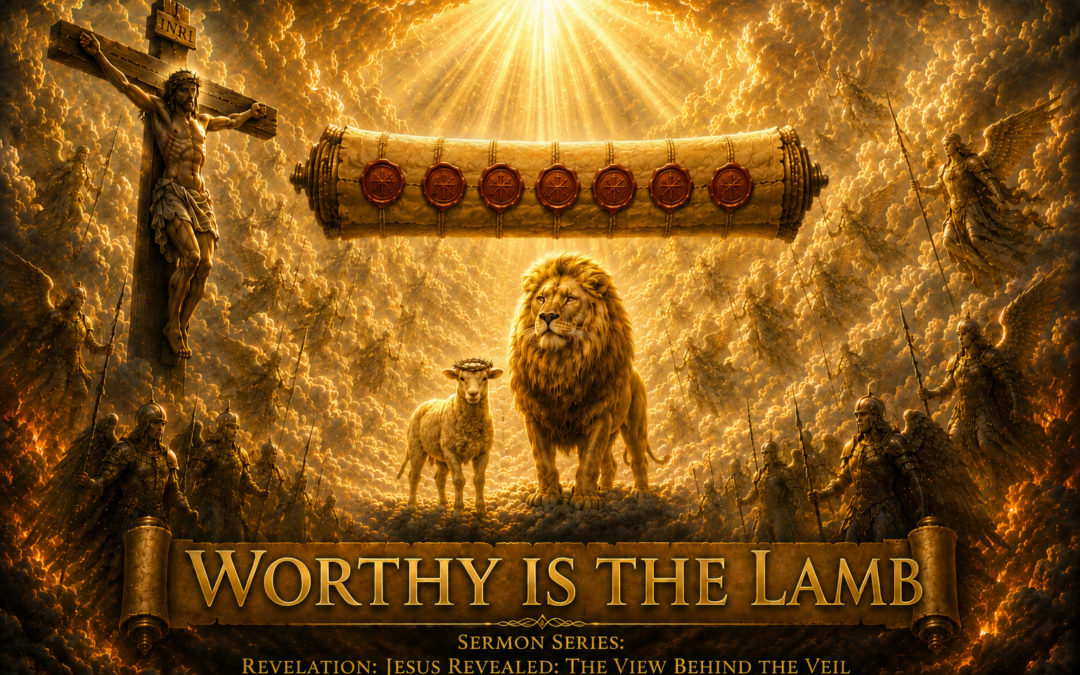
Join us as we continue our verse-by-verse study of the Book of Revelation. In this message, we dive deep into Revelation 5:7-14, witnessing the breathtaking scene in the heavenly throne room where the Lamb of God approaches the throne to take the scroll. Discover why Jesus Christ alone is uniquely qualified and completely worthy to unlock history and receive all our praise.
Audio Only
Video
Sermon Notes:
Revelation 5:7 Then He came and took the scroll out of the right hand of Him who
sat on the throne.
Revelation 5:8 Now when He had taken the scroll, the four living creatures and
the twenty-four elders fell down before the Lamb, each having a harp, and golden
bowls full of incense, which are the prayers of the saints.
Revelation 5:9 And they sang a new song, saying: “You are worthy to take the scroll,
and to open its seals; For You were slain, and have redeemed us to God by Your
blood out of every tribe and tongue and people and nation,
Revelation 5:10 And have made us kings and priests to our God; And we shall reign
on the earth.”
Revelation 5:11 Then I looked, and I heard the voice of many angels around the
throne, the living creatures, and the elders; and the number of them was ten
thousand times ten thousand, and thousands of thousands,
Revelation 5:12 saying with a loud voice: “Worthy is the Lamb who was slain to
receive power and riches and wisdom, and strength and honor and glory and blessing!”
Revelation 5:13 And every creature which is in heaven and on the earth and under
the earth and such as are in the sea, and all that are in them, I heard saying:
Blessing and honor and glory and power be to Him who sits on the throne, and to
the Lamb, forever and ever!”
Revelation 5:14 Then the four living creatures said, “Amen!” And the twenty-four
elders fell down and worshiped Him who lives forever and ever.
Dr. Donald Grey Barnhouse, writing on Revelation, said this:
“There are four things out of place in the universe. The church is out of place; she
ought to be in heaven. Israel is out of place; she should be in the land that has been
sworn to her, and possess every part of it. The devil is out of place; he ought to be
in the lake of fire, but he’s still roaming free. And Christ is out of place; He should
be through with intercession and seated on His throne, reigning, instead of upon
His Father’s throne interceding.”
I. THE SPECIAL SEARCH FOR THE WORTHY ONE.
II. THE SPECIFIC SELECTION OF THE WORTHY ONE.
III. THE SLAIN SACRIFICE KNOWN AS THE WORTHY ONE.
IV. THE SPONTANEOUS SERVICE TO THE WORTHY ONE.
Revelation 5:7 Then He came and took the scroll out of the right hand of Him who
sat on the throne.
Revelation 5:8 Now when He had taken the scroll, the four living creatures and
the twenty-four elders fell down before the Lamb, each having a harp, and golden
bowls full of incense, which are the prayers of the saints.
Psalm 33:2 Praise the Lord with the harp; Make melody to Him with an instrument
of ten strings.
Psalm 144:9 I will sing a new song to You, O God; On a harp of ten strings I will sing
praises to You,
Revelation 5:8 “… the twenty-four elders fell down before the Lamb, each having
a harp, and golden bowls full of incense, which are the prayers of the saints.
Luke 1:9 according to the custom of the priesthood, his lot fell to burn incense
when he went into the temple of the Lord.
Luke 1:10 And the whole multitude of the people was praying outside at the hour
of incense.
In the Old Testament, God had a temple for His people.
In the New Testament God has a people for His temple
1 Corinthians 6:19 Or do you not know that your body is the temple of the Holy Spirit
who is in you, whom you have from God, and you are not your own?
1 Thessalonains 5:17 Pray without ceasing,
V. THE SAINTS SONG FOR THE WORTHY ONE.
Revelation 5:9 And they sang a new song, saying: “You are worthy to take the scroll,
and to open its seals; For You were slain, and have redeemed us to God by Your
blood out of every tribe and tongue and people and nation,
Psalm 33:3 Sing to Him a new song; Play skillfully with a shout of joy
Psalm 40:3 He has put a new song in my mouth–Praise to our God
Isaiah 42:10 Sing to the Lord a new song, and His praise from the ends of the earth,
Colossians 3:16 Let the word of Christ dwell in you richly in all wisdom, teaching and
admonishing one another in psalms and hymns and spiritual songs, singing with
grace in your hearts to the Lord.
Revelation 4:8 “…they do not rest day or night, saying: “Holy, holy, holy, Lord God
Almighty Who was and is and is to come!”
Psalm 98:4 Shout joyfully to the Lord, all the earth; Break forth in song, rejoice and
sing praises
Psalm 47:1 Oh, clap your hands, all you peoples! Shout to God with the voice of triumph!
1. IT IS A WORSHIP SONG
Revelation 5:9 And they sang a new song, saying: “You are worthy …”
Plato said, “Every heart sings a song incomplete until another heart whispers back.”
Is he worthy? Is he worthy? Of all blessing and honor and glory.
Is he worthy of this? HE IS!
Revelation 5:12 …”Worthy is the Lamb who was slain to receive power and riches
and wisdom, and strength and honor and glory and blessing!”
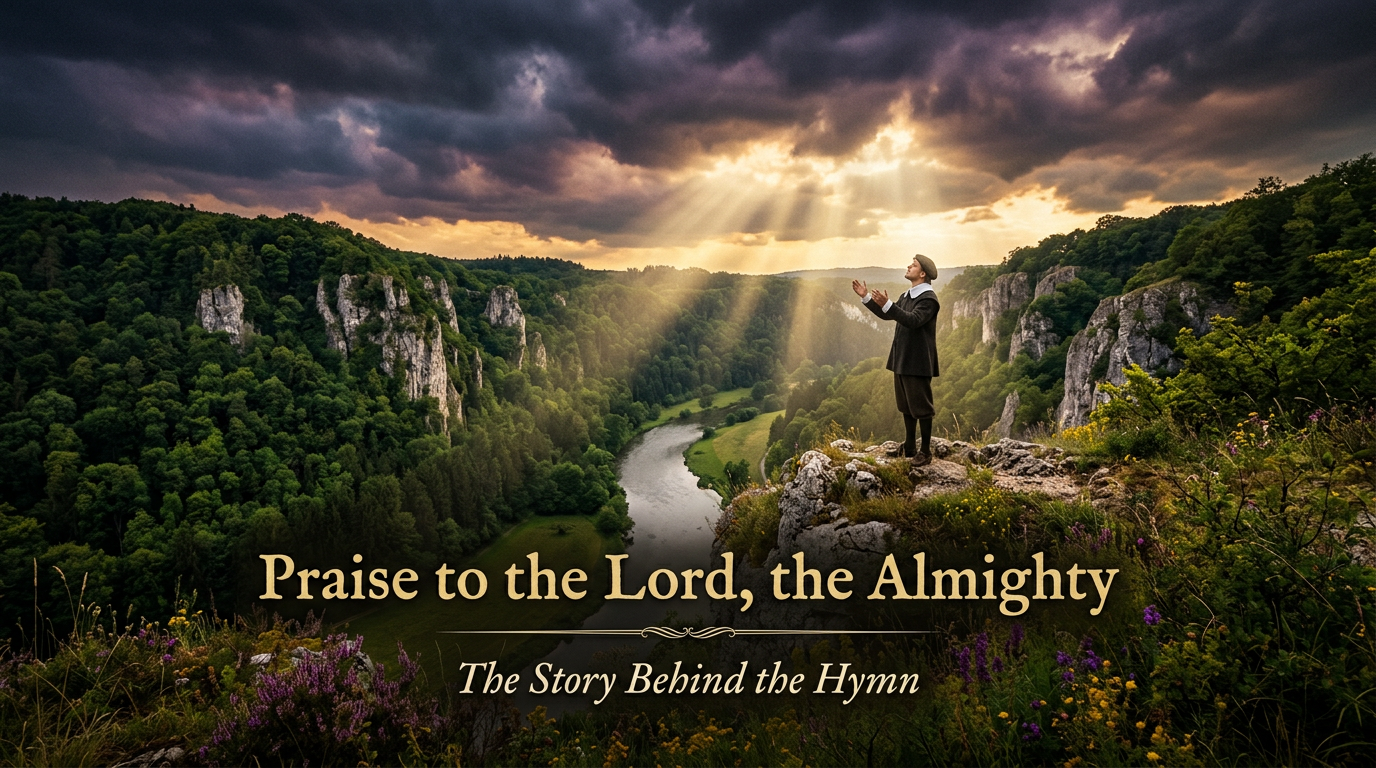
Praise to the Lord, the Almighty: The Story Behind the Hymn
How a 30-year-old German schoolmaster living in a cave in a limestone valley wrote the greatest hymn of praise in the history of the Christian church — and why the valley where he found God in creation would one day give its name to Neanderthal Man
Introduction: A Hymn Worth 345 Years
Some hymns are products of their moment — born in a particular revival, suited to a particular theological controversy, loved by a particular generation, and then quietly retired to the back pages of hymnals that no one opens anymore. And then there are hymns like this one. Hymns that seem to belong not to any era but to every era. Hymns that the church of the 17th century sang and the church of the 21st century still sings, with equal conviction and equal joy, because the truth they carry is not fashionable truth but foundational truth — the kind that does not need to be updated because it was never merely current.
“Praise to the Lord, the Almighty, the King of creation” is that kind of hymn. Written in German in 1680 by a 30-year-old Reformed schoolmaster named Joachim Neander — who was, at the time, living in disgrace, dismissed from his position, and sheltering in a limestone cave in a valley on the Rhine — it has been described by hymnologist John Julian in his Dictionary of Hymnology as “a magnificent hymn of praise to God, perhaps the finest creation of its author, and of the first rank in its class.” It appeared in Queen Elizabeth II’s Diamond Jubilee service at Westminster Abbey. It is sung at state funerals, at college graduations, at baptisms and confirmations. It has been translated into dozens of languages. And every Sunday in thousands of churches around the world, its great ancient melody rings out — the same melody that was first published in the city of Stralsund on the Baltic coast of Germany in 1665.
But behind the grandeur of the hymn is a story that is anything but grand — at least by the world’s standards. It is the story of a short life, a dramatic conversion, a turbulent ministry, a season of exile, and a young man who found God most powerfully not in a cathedral but in a cave, not in success but in suffering, and not in the approval of his superiors but in the beauty of a wild limestone valley that — in one of history’s most remarkable coincidences — would one day give its name to an ancient species of human being.
Joachim Neander: A Life Burning Bright and Brief
Joachim Neander was born in 1650 in Bremen, a prosperous trading city in northern Germany near the mouth of the Weser River. His family had already shown a remarkable pattern: his grandfather was a musician, and his father was a Latin teacher — a combination of artistic sensibility and scholarly discipline that would shape the young Neander deeply. The family name was originally “Neumann,” a common German surname meaning “new man.” At some point — following the Renaissance fashion for Hellenizing surnames — the family adopted the Greek equivalent: Neander. It was a name that would prove prophetic in ways no one could have imagined.
As a young man, Neander showed little interest in either his family’s faith or his father’s scholarly discipline. By his late teens and early twenties he was living what contemporary sources describe as a “wild and godless life” — the specific details are lost to history, but the testimony of his later conversion makes clear that it was a genuine departure from Christian practice rather than mere youthful restlessness. He was, in other words, not someone who drifted away from faith gradually, but someone who actively rejected it.
The turning point came in 1670. Neander was 20 years old, a student of Latin and poetry, when he went with two friends to hear the preaching at St. Martin’s Church in Bremen. The three young men went with entirely wrong motives: they intended to mock the new pastor, Theodor Undereyck, and to criticize his theology. What happened instead is one of the classic conversion narratives of German Protestant history. Neander heard the Gospel preached with clarity and power, and something broke open inside him. He left St. Martin’s Church a changed man — converted to Christian faith and to the Calvinist-influenced Reformed theology that Undereyck preached.
The transformation was complete and lasting. Neander devoted himself immediately to theological study and became deeply influenced by two of the great Pietist thinkers of the era: Philipp Spener (1635–1705), the father of German Pietism whose call for a warmer, more experiential faith was reshaping German Protestantism, and Johann Jakob Schütz (1640–1690), himself a hymn writer and a man whose emphasis on personal devotion and Scripture meditation shaped the younger generation profoundly. These influences gave Neander’s faith a combination that was relatively unusual for the period: rigorous Reformed theology (God is sovereign, Scripture is supreme, worship is ordered) held together with warm Pietist devotion (personal relationship with Christ, the inner life matters, prayer and praise flow from the heart).
In 1674, at just 24 years of age, Neander was appointed Rector — headmaster — of the Latin School in Düsseldorf, a classical academy affiliated with the German Reformed Church. It was a position of real responsibility and real opportunity. He was recognized as a gifted teacher, a compelling preacher, and a man of uncommon spiritual depth for his age. The students respected him. The congregation he served alongside the school appreciated his gifts. For a time, things went well.
But Neander’s Pietist convictions eventually brought him into conflict with his more conservative Reformed superiors. His organizing of private devotional gatherings — prayer meetings, Bible studies, informal worship — was seen as a threat to the established church order. His evangelical zeal, which drew people in numbers that made the institutional church uncomfortable, led to accusations of separatism. In 1676, he was formally suspended from his teaching position and banned from preaching in Düsseldorf.
What did he do? He moved into a cave.
A few miles from Düsseldorf, on the banks of a small tributary of the Rhine called the Düssel, there was a wild and beautiful limestone ravine — deep rock faces, wooded slopes, caves, waterfalls, and a small river winding through the valley floor. Neander had discovered this valley during his years in Düsseldorf and had come to love it as a place of solitary prayer and reflection. When he was dismissed from his position and his lodgings at the school, he retreated there. He is said to have lived, at least in part, in one of the limestone caves — still known today as “Neander’s Cave” (Neandershöhle) — and to have spent this period of involuntary exile in prayer, Scripture meditation, and the writing of hymns.
It is from this extraordinary season of life that most of his approximately 60 hymns emerged. The beauty of the valley — its soaring cliffs, its living water, its birdsong and wildflowers, its silence and grandeur — filled his imagination and his theology. Creation was not merely scenery for Neander. It was a living sermon, a visible declaration of the majesty, power, and provision of its Creator. And from that conviction came the hymn that would outlive him by centuries.
He was eventually restored to his position — he returned to Bremen in 1679 to serve as assistant pastor at St. Martin’s Church, the very church where his conversion had taken place. But his health was already failing. Tuberculosis, the great destroyer of so many gifted young lives in the pre-antibiotic world, had taken hold. On May 31, 1680 — the same year his hymn collection was published — Joachim Neander died in Bremen at the age of 30. He had written more than 60 hymns and composed tunes for many of them in a Christian life of barely ten years.
The Neanderthal Connection: History’s Most Unlikely Footnote
Here is one of the most extraordinary coincidences in the history of both theology and paleontology. The limestone valley where Joachim Neander walked and prayed and wrote his hymns was named after his family — the Neander Valley, in German the Neanderthal (or Neandertal, in modern spelling). Nearly 200 years after Neander’s death, in the summer of 1856, workers quarrying limestone in the Neandershöhle — Neander’s Cave — discovered fossilized skeletal remains of a previously unknown species of ancient human being. Scientists named the species after the valley, and the valley after the hymnist: Homo neanderthalensis — Neanderthal Man.
Joachim Neander thus holds the singular distinction — unique in the entire history of religion — of being the only hymn writer after whom a species of hominid is named. Bach does not have a fossil. Luther does not have a fossil. Wesley does not have a fossil. Neander does. The man who wrote “All ye who hear, now to his temple draw near; join me in glad adoration” gave his name to a creature whose spiritual capacity — if any — we can only wonder at. It is either the most ironic or the most poetically perfect footnote in the history of praise.
The Tune: From Stralsund to the World
The melody to which “Praise to the Lord, the Almighty” is sung — known by its incipit as LOBE DEN HERREN — is itself older than Neander’s text. It first appeared in the Stralsund Gesangbuch of 1665, a Lutheran hymnal published in the Baltic port city of Stralsund (in what is now northeastern Germany). The composer is listed as anonymous, and the melody itself is believed to be based on an older German folk tune. It was first published there as a secular song, and several variants circulated through German musical life between 1665 and 1680.
When Neander wrote “Lobe den Herren, den mächtigen König der Ehren” in 1680, he chose this existing melody for his text — and the marriage of text and tune proved so perfect that virtually every subsequent version of the hymn has used the same melody. The tune is catalogued in the Zahn index as number 1912c. Its distinctive meter — 14.14.4.7.8 — is unusual, which is part of what gives the hymn its sweeping, majestic character: the long opening lines feel like the wide horizons of creation itself, and the shorter lines in the middle create a gathering intensity before the final long line releases the praise in full. It is music that feels as if it was designed to fill cathedrals — and yet it was written for ordinary German churchgoers in the 17th century.
The tune received its definitive English arrangement through William Sterndale Bennett (1816–1875) and Otto Goldschmidt (1829–1907), who harmonized it for Catherine Winkworth’s Chorale Book for England in 1863. This arrangement — stately, rich, and congregationally singable — is the version most widely used in English-speaking churches today.
Catherine Winkworth: The Woman Who Gave England a Treasure
Most English-speaking Christians who sing “Praise to the Lord, the Almighty” have never heard the name Catherine Winkworth — but they owe her an enormous debt. Born on September 13, 1827, in Holborn, London, Winkworth became the most important translator of German hymns into English in the 19th century, and arguably in all of Christian history. Her translations are distinguished by a quality that is genuinely rare in translation work: they are both faithful to the original and beautiful in the target language simultaneously. They do not sacrifice meaning for beauty or beauty for meaning. They do both.
Winkworth learned German during a year she spent in Dresden, Germany, and spent much of her adult life in Manchester, England. In 1855 she published Lyra Germanica, a collection of German hymns translated into English, which became an immediate success and went through numerous editions. In 1863 she published The Chorale Book for England, which paired her translations with their original German chorale melodies — edited by William Sterndale Bennett and Otto Goldschmidt. It was in this volume that her English translation of Neander’s “Lobe den Herren” appeared, and it became the standard English text almost immediately.
Winkworth died on July 1, 1878, near Geneva, Switzerland, at the age of 50. She is commemorated in the liturgical calendar of the Episcopal Church on July 1, and a stained glass window in the Bristol Cathedral honors her memory. Her contribution to English hymnody is immeasurable — she effectively gave English-speaking Christians access to the entire German chorale tradition, including not only Neander but Luther, Paul Gerhardt, and dozens of other Continental hymn writers whose riches would otherwise have remained locked behind a language barrier.
Scripture Roots: Psalms 103 and 150
“Praise to the Lord, the Almighty” is, at its core, a paraphrase of two great Psalms of the Hebrew Bible — and understanding those Psalms is essential to understanding what Neander was doing when he wrote it.
Psalm 103 opens with one of the most famous calls to personal worship in all of Scripture:
“Bless the LORD, O my soul, and all that is within me, bless his holy name! Bless the LORD, O my soul, and forget not all his benefits.” — Psalm 103:1–2
Neander’s opening line — “O my soul, praise him, for he is thy health and salvation” — is a direct echo of this Psalm’s personal, first-person summons. The psalmist is not merely describing God in the abstract. He is talking to himself, commanding his own inner life to wake up and worship. This is not cool theological observation. It is urgent, personal, passionate praise — the cry of a soul who knows what it means to be saved, healed, and sustained.
Psalm 150 is the great doxological finale of the entire Psalter — the explosion of praise that the whole book has been building toward:
“Praise him for his mighty deeds; praise him according to his excellent greatness… Let everything that has breath praise the LORD! Praise the LORD!” — Psalm 150:2, 6
Neander’s final stanza — “All that hath life and breath, come now with praises before him” — is almost a direct quotation of Psalm 150:6. The entire cosmos is being summoned to worship: not just the congregation, not just the church, not just humanity — but every breathing creature in creation. The hymn ends, as the Psalter ends, with a universal, all-inclusive, boundary-dissolving call to praise.
Beyond these two anchor Psalms, the hymn also draws on Psalm 61:4 (“Let me dwell in your tent forever; let me take refuge under the shelter of your wings”), Psalm 23:6 (“Surely goodness and mercy shall follow me all the days of my life”), and Psalm 91. The sheltering-wings imagery in verse two — “Shelters thee under his wings, yea, so gently sustaineth” — is a direct pastoral application of these protective-God texts. Neander was writing not just a hymn of abstract praise but a hymn of pastoral comfort: the God who is King of creation is also the God who shelters, sustains, and defends.
Lyrical Analysis: Verse by Verse
Verse 1 — The Universal Call
Praise to the Lord, the Almighty, the King of creation! O my soul, praise him, for he is thy health and salvation! All ye who hear, now to his temple draw near; join me in glad adoration.
The opening salvo is breathtaking in its sweep. “The King of creation” — not the King of Israel, not the King of the church, not the King of the righteous — but the King of everything that exists. Neander was a Reformed Calvinist, and the sovereignty of God over all creation was not a peripheral doctrine for him but the foundation of everything. The second line turns immediately from the cosmic to the personal: “O my soul.” The same God who rules the universe is also the health and salvation of this one particular soul. The universal and the intimate are held in perfect tension from the very first verse. The final couplet extends the invitation outward: “All ye who hear” — whoever is within earshot of this hymn is being invited into the same praise. The temple is not a building. It is the presence of the living God, available to all who draw near.
Verse 2 — The Sheltering God
Praise to the Lord, who o’er all things so wondrously reigneth, shelters thee under his wings, yea, so gently sustaineth! Hast thou not seen how thy desires e’er have been granted in what he ordaineth?
This verse reveals something of the pastoral heart behind the hymn. Neander was not a man who had experienced an easy life — he had been dismissed, exiled, and was at the time of writing slowly dying of tuberculosis. Yet he writes of a God who “wondrously reigneth” and “gently sustaineth.” The question at the end of the verse — “Hast thou not seen how thy desires e’er have been granted in what he ordaineth?” — is not a naïve assertion that God always gives us what we want. It is a deeper claim: that God’s purposes, even when they confound our plans, are ultimately the fulfillment of our deepest desires. When we look back on the story of our lives, we will see His hand in what He ordained. Providence is not always legible in the moment. It becomes clear in retrospect.
Verse 3 — The Defending God
Praise to the Lord, who doth prosper thy work and defend thee! Surely his goodness and mercy here daily attend thee; ponder anew what the Almighty can do, if with his love he befriend thee.
“Ponder anew what the Almighty can do” — this single line may be the most memorable of the entire hymn. It is an invitation to theological imagination: stop and think, really think, about the capacities of the God you worship. If the Creator of the universe has chosen to befriend you — to make Himself your advocate, your defender, your daily companion — what then is impossible? The line does not make a specific promise. It opens a door. It invites the worshipper to bring every fear, every limitation, every impossible situation into the orbit of this one question: what can the Almighty do? The echo of Psalm 23:6 — “Surely goodness and mercy shall follow me all the days of my life” — is clear and intentional.
Verse 4 — The Universal Doxology
Praise to the Lord! O let all that is in me adore him! All that hath life and breath, come now with praises before him! Let the amen sound from his people again; gladly for e’er we adore him.
The final verse is the great crescendo — the point at which the hymn bursts its banks and floods the world with praise. “All that is in me” — every faculty, every thought, every emotion, every desire — is summoned to adore Him. Then the circle widens: “All that hath life and breath” — a direct echo of Psalm 150:6, bringing every living creature into the doxology. And then the final instruction: “Let the amen sound from his people again.” The “amen” here is not merely a liturgical sign-off. It is a declaration of covenant faithfulness — a people saying together, “So be it. This is true. We stake our lives on this.” And then the last word: “gladly.” The praise is not reluctant, not dutiful, not performed. It is glad. It is joyful. It flows from a soul that has encountered the King of creation and been overwhelmed by what it found.
Timeline: 345 Years of Praise
Year
Event
1650
Joachim Neander born in Bremen, Germany, son of a Latin teacher, grandson of a musician
1665
The tune LOBE DEN HERREN first published in the Stralsund Gesangbuch — an anonymous German folk-based melody that would later be paired with Neander’s text
1670
Neander converted to Christian faith after hearing pastor Theodor Undereyck preach at St. Martin’s Church, Bremen — he had gone intending to mock the preacher
1674
Appointed Rector (Headmaster) of the Latin School in Düsseldorf at age 24
1676
Suspended from his position due to conflict with Reformed church authorities over his Pietist gatherings and evangelistic activities; retreats to the limestone valley near Düsseldorf now named Neanderthal
1676–1679
Period of exile in the Neander Valley; writes the majority of his approximately 60 hymns, including “Lobe den Herren”; lives at least in part in Neandershöhle (Neander’s Cave)
1679
Returns to Bremen; appointed assistant pastor at St. Martin’s Church — the site of his own conversion
1680
“Lobe den Herren, den mächtigen König der Ehren” published in Neander’s collection A und Ω. Joachimi Neandri Glaub- und Liebesübung; Neander dies of tuberculosis on May 31, aged 30
1800
King Frederick William III of Prussia hears the hymn for the first time; reportedly declares it his favorite hymn — a royal endorsement that accelerates its spread across German-speaking lands
1856
Workers quarrying limestone in the Neandershöhle discover fossilized remains of an unknown ancient human species; named Homo neanderthalensis — Neanderthal Man — after the valley named after Neander
1858
Catherine Winkworth publishes an early English translation of the hymn in Lyra Germanica
1863
Winkworth’s definitive English translation published in The Chorale Book for England, with music arranged by Bennett and Goldschmidt; this becomes the standard English text used in hymnals worldwide
1878
Catherine Winkworth dies near Geneva at age 50; her translations already widely used across English-speaking denominations
Late 19th–20th century
The hymn enters virtually every major English-language hymnal — Lutheran, Methodist, Baptist, Anglican, Presbyterian, and Catholic
1989
Included in The United Methodist Hymnal (#139) as one of the most frequently sung historic hymns
2004
Passion / Christy Nockels records a contemporary live version for Hymns Ancient and Modern (sixstepsrecords/Sparrow), introducing it to a new generation
2013
Sung at Westminster Abbey during the service celebrating the 60th anniversary of Queen Elizabeth II’s coronation — the same British royal tradition that would inspire “Majesty” 36 years earlier
2024–present
Continues to appear in new worship arrangements; listed as one of the top-ranked hymns in CCLI globally; sung in churches on every continent in dozens of languages
Notable Recordings and Performances
Artist / Context
Notes
Westminster Abbey Choristers
Performed at the 60th Coronation Anniversary service of Queen Elizabeth II, June 4, 2013; one of the most globally watched performances of the hymn in modern times
Passion / Christy Nockels
Hymns Ancient and Modern (2004, sixstepsrecords/Sparrow); live recording that introduced the hymn to a new generation of contemporary worshippers
T4G (Together for the Gospel)
Performed live at multiple T4G conferences; lyric video released 2020; one of the most-streamed versions among Reformed/evangelical audiences
Concordia Publishing House
Recorded for One and All Rejoice (2024); continues the Lutheran tradition of the hymn as a congregational standard
Nathan Drake / Reawaken Hymns
Contemporary acoustic arrangement (2021); widely used for modern worship settings
King’s College Cambridge
Multiple recordings across decades; the choir’s choral version remains one of the most beloved classical recordings of the hymn
Various German choirs
The original German “Lobe den Herren” continues to be sung in German Lutheran and Reformed churches; recordings by the Thomanerchor Leipzig and others
Frequently Asked Questions
Who wrote “Praise to the Lord, the Almighty”?
The original German hymn “Lobe den Herren, den mächtigen König der Ehren” was written by Joachim Neander (1650–1680), a German Reformed schoolmaster and hymn writer from Bremen, Germany. The standard English translation was made by Catherine Winkworth (1827–1878), published in The Chorale Book for England in 1863.
What does “Lobe den Herren” mean in English?
“Lobe den Herren” is German for “Praise the Lord” — specifically, it is an imperative: a command to praise. The full original title, “Lobe den Herren, den mächtigen König der Ehren,” translates literally as “Praise the Lord, the mighty King of glory,” which Winkworth rendered as “Praise to the Lord, the Almighty, the King of creation.”
What Bible verses is “Praise to the Lord, the Almighty” based on?
The hymn is a paraphrase of Psalm 103 and Psalm 150. It also draws on Psalm 61:4 (sheltering under God’s wings), Psalm 23:6 (goodness and mercy), and Psalm 91. The final verse closely echoes Psalm 150:6: “Let everything that has breath praise the LORD.”
What is the connection between Joachim Neander and Neanderthal Man?
The limestone valley near Düsseldorf where Neander walked, prayed, and wrote his hymns was named the Neanderthal (Neander Valley) after his family. In 1856 — nearly 200 years after Neander’s death — fossilized remains of an ancient human species were discovered in the valley’s limestone caves and named Homo neanderthalensis — Neanderthal Man — after the valley. This makes Neander the only hymn writer in history after whom a species of hominid is named.
Where does the melody to “Praise to the Lord, the Almighty” come from?
The melody, known as LOBE DEN HERREN, was first published in the Stralsund Gesangbuch of 1665 — a Lutheran hymnal from the Baltic city of Stralsund, Germany. The composer is anonymous, and the tune is believed to be based on an older German folk melody. Its unusual meter (14.14.4.7.8) gives it the sweeping, majestic character that has made it so enduring.
Legacy: The Hymn That Outlasted an Empire
Joachim Neander died at 30 with no cathedral, no institution, no movement, and no monument to his name. He had been dismissed from his job, exiled from his community, and reduced to living in a cave. By any earthly measure, his was not a life of visible success. And yet the words he wrote in that cave — the words that poured out of him as he walked the limestone paths of the valley that bore his name, as he watched the light change on the cliffs and heard the river running below — those words have outlasted every institution that dismissed him.
They were sung at the coronation anniversary of a Queen. They were sung at the funerals of kings. King Frederick William III of Prussia made “Lobe den Herren” his personal favorite — he first heard it in 1800, over a century after Neander’s death, and it became the soundtrack of his devotional life. It has been included in virtually every major Protestant hymnal in every language for three and a half centuries. It was described by the greatest hymnologist of the 19th century as “of the first rank in its class.” And it is still being sung — in German, in English, in Korean, in Swahili, in Spanish — every Sunday in tens of thousands of churches around the world.
What made the difference? Not Neander’s position. Not his success. Not his vindication by his superiors or his institutional respectability. What made the difference was that he saw something in the valley — in the sweep of the cliffs and the light on the water and the wildflowers in the summer — that was more real to him than any of the things that had been taken from him. He saw the King of creation. And he could not stop praising Him.
That is why the hymn endures. Because creation is still magnificent. Because the King is still on His throne. Because there are still people — in valleys and cities and caves and cathedrals — who look at what has been made and feel, rising irresistibly in their chests, the only possible response: Praise to the Lord, the Almighty, the King of creation.
Text: “Lobe den Herren, den mächtigen König der Ehren” by Joachim Neander (1650–1680), first published in A und Ω. Joachimi Neandri Glaub- und Liebesübung, Bremen, 1680. English translation by Catherine Winkworth (1827–1878), first published in The Chorale Book for England, London, 1863. Tune: LOBE DEN HERREN, Anonymous (1665), first published in Stralsund Gesangbuch, 1665; harmonized by William Sterndale Bennett (1816–1875) and Otto Goldschmidt (1829–1907). Public Domain.
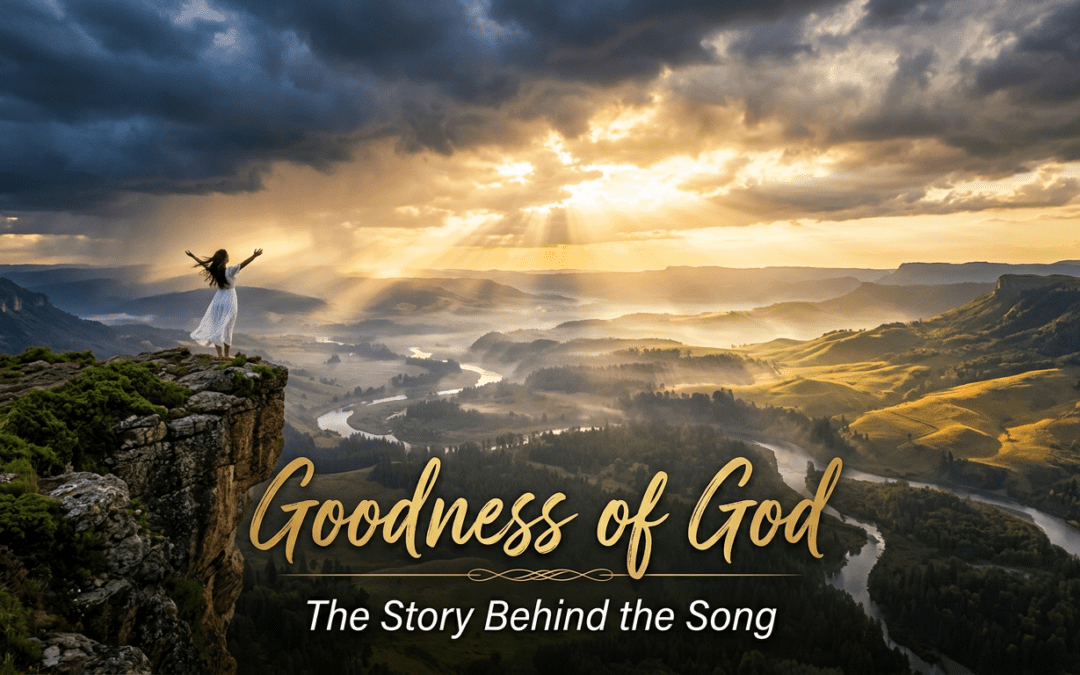
How Jenn Johnson sang a song into her phone on a country road after adopting her son — and how those unrehearsed words of gratitude became one of the most beloved worship anthems of the 21st century, winning Song of the Year at the 2023 GMA Dove Awards and topping the Billboard Gospel Chart through CeCe Winans’ iconic cover
Introduction: A Song Born on a Country Road
Some of the greatest worship songs in Christian history were born not in recording studios or songwriting retreats, but in the unguarded, unscripted moments of ordinary life — when someone is simply driving down a road and a truth so large and so personal that it cannot be contained suddenly pours out of them and into the air. Charles Wesley reportedly wrote hymns on horseback. Rich Mullins drove with the windows down. And in 2018, Jenn Johnson was driving on a long country road in northern California, freshly home from adopting her son, when she grabbed her phone and started singing.
What she sang into that phone — a raw, grateful, overflowing declaration of God’s faithfulness in her life — became the foundation of “Goodness of God.” It was refined, co-written with an extraordinary team of songwriters, professionally recorded at Bethel Church in Redding, California, and released in January 2019 on Bethel Music’s album Victory. Within months it had spread to churches around the world. Within two years it had been covered by one of the greatest voices in Gospel music history. And in October 2023 — four years after its release — it stood on the stage of the GMA Dove Awards in Nashville as Song of the Year. The song that began on a country road with a phone and a grateful heart had become the most celebrated worship song of its era.
Jenn Johnson: The Woman Behind the Voice
Jennifer “Jenn” Johnson was born on April 15, 1982, and grew up in the orbit of Bethel Church in Redding, California — one of the most influential evangelical churches in contemporary American Christianity. As a teenager, she found herself drawn deeply into worship, and it was at Bethel that she met Brian Johnson, son of the church’s senior pastor Bill Johnson. They married in 2000, and in doing so she became not just a member of Bethel’s community but a central architect of its worship culture.
Together, Brian and Jenn Johnson have been leading worship at Bethel Church for over 25 years. In 2001, they released their debut live worship album Undone as Brian & Jenn Johnson. But it was as part of the collective known as Bethel Music — which they co-founded — that their impact became global. Bethel Music is not merely a worship band. It is a worship community: a collective of resident songwriters, worship leaders, and musicians at Bethel Church who record live worship services and release them to the world. The collective has produced some of the most widely sung worship music of the past two decades, including “This Is Amazing Grace” (Phil Wickham), “No Longer Slaves,” “Raise a Hallelujah,” and dozens of others.
Jenn became President of Bethel Music in 2021 — a role she had effectively been fulfilling for years before the title was formalized. She is also the founder of Lovely by Jenn Johnson, a lifestyle brand focused on wholeness and beauty for women, and the author of the book All Things Lovely (2021). Premier Christianity magazine identified “Goodness of God” as the third-most sung worship song in the UK according to CCLI data — a staggering testament to a woman who began her worship ministry as a teenager in a California church and never stopped.
Her five children — Haley, Téa, Braden, Ryder Moses, and Malachi Judah — are woven through the fabric of her music. Two of them, Ryder Moses and Malachi Judah, were adopted. And it is from the journey of adoption — specifically the adoption of Ryder Moses — that “Goodness of God” was born.
Ryder Moses: The Adoption That Changed Everything
Ryder Moses Johnson. The name itself is a theological statement. “Ryder” suggests a journey — someone on the move. “Moses” means “drawn out of the water” — but in Jenn and Brian’s intentional selection, they understood it as pointing to a deeper meaning: deliverer, one rescued in order to rescue others. Ryder Moses: adopted deliverer. A child drawn out of one situation and placed into a family, just as Moses was drawn from the Nile and placed into Pharaoh’s household — and then used to deliver a nation.
The adoption process is rarely simple or painless. For the Johnsons, it involved a long season of waiting, uncertainty, paperwork, prayer, and the particular kind of emotional exhaustion that comes from loving a child before you can hold them. And it was during this season — specifically in the period after they had finally brought Ryder home — that Jenn found herself driving on a country road in northern California, overcome with gratitude.
In her own words, as shared in multiple interviews and summarized powerfully in her conversation with Worship Leader magazine: “I just was so overcome with the goodness of God in my life and that’s my song, you know, because God has just walked me through hell and high water and His voice and the power of His word have gotten me through everything and it’s my anchor.” She grabbed her phone — not a notebook, not a piano, not a recording setup — and sang what was in her heart into the phone’s voice memo app while driving. What came out was not a polished song. It was a testimony. A declaration. An overflowing of a heart that had seen God be faithful in the hardest places and could not stay silent about it.
Those raw recorded words became the seed of “Goodness of God.” Jenn later brought the melody and the heart of the song to a co-writing session that included her husband Brian Johnson, as well as professional CCM songwriters Ed Cash, Ben Fielding (of Hillsong Worship), and Jason Ingram. Together, they shaped the rough material into the structured, singable, theologically rich song that the world would come to know.
The Songwriters: A Team of Five
“Goodness of God” carries five writing credits — an unusually collaborative origin for a worship song that feels so intimate and personal. Each songwriter brought something essential to the final result.
Jenn Johnson provided the heart — the lived experience, the melody fragment, the emotional core. The song is, first and foremost, her testimony. Without her voice and her story, there is no song.
Brian Johnson — her husband and longtime musical partner — helped develop the musical structure and theological depth. Brian is himself an accomplished songwriter and worship leader at Bethel, and his fingerprints are on many of Bethel Music’s most enduring songs.
Ed Cash is one of the most decorated producers and co-writers in contemporary Christian music. He has written or co-written some of the most widely sung songs of the past two decades, including “How He Loves,” “Your Grace Is Enough,” and material for Chris Tomlin, Christy Nockels, and countless others. Cash also produced “Goodness of God,” handling the sonic architecture of the recording that would be released on Victory.
Ben Fielding is an Australian songwriter and worship leader with Hillsong Worship, whose credits include “What a Beautiful Name,” “This I Believe (The Creed),” and “King of Kings.” His contribution to “Goodness of God” connects the song to the broader global worship movement that Hillsong and Bethel have jointly shaped over the past two decades.
Jason Ingram is a Nashville-based songwriter and producer with multiple GMA Dove Awards to his name, known for his work with Chris Tomlin, Matt Maher, and Crowder. His expertise in shaping lyrics for congregational singability — clarity, repetition, emotional arc — helped give “Goodness of God” the structure that makes it so easy for a congregation to learn and internalize.
Scripture Foundation: Psalm 23 and the Pursuing God
The theological heart of “Goodness of God” is anchored most directly in Psalm 23:6 — one of the most famous verses in the entire Bible:
“Surely goodness and mercy shall follow me all the days of my life, and I will dwell in the house of the Lord forever.” — Psalm 23:6 (ESV)
The bridge of “Goodness of God” — “Your goodness is running after, it’s running after me” — is a direct and deliberate paraphrase of this verse, and the Hebrew behind the English word “follow” is the key to understanding why. The Hebrew word used in Psalm 23:6 is radaph, which means not merely to walk behind or accompany, but to pursue, to chase, to run after. It is the same word used for a pursuer or an enemy in hot pursuit. Machias Valley Baptist Church’s Pastor Zach explained it this way: “God often has to drive us, push and prod us, to go down the path we would rather not tread. Yet when we do, not only does He Himself follow us — ‘Goodness’ with a capital ‘G’ — but ‘goodness’ follows; that is, good results follow our obedience.”
The songwriters understood what most casual readers of Psalm 23 miss: David is not describing a gentle, passive God who happens to be nearby. He is describing a God who pursues His people with goodness and mercy the way a determined hunter pursues prey. The goodness of God is not waiting for you to deserve it. It is running after you — through the valley of the shadow of death, through the seasons you didn’t choose, through the roads you drove in tears with a phone recording your prayers.
The song also draws richly from several other scriptural streams. The opening lines echo Exodus 33:19, where God declares to Moses: “I will cause all my goodness to pass in front of you.” Psalm 89:1 in the Amplified Bible reads: “I will sing of the goodness and lovingkindness of the Lord forever; with my mouth I will make known your faithfulness from generation to generation” — the theological DNA of the chorus. Psalm 34:8 — “Taste and see that the Lord is good” — and Psalm 27:13 — “I will see the goodness of the Lord in the land of the living” — provide further roots. And the bridge’s language of surrender — “With my life laid down, I surrender now, I give You everything” — echoes Romans 12:1: “Present your bodies as a living sacrifice, holy and acceptable to God, which is your spiritual worship.”
Lyrical Analysis: Every Line a Declaration
Verse 1 — Morning to Night
I love You, Lord, for Your mercy never fails me All my days, I’ve been held in Your hands From the moment that I wake up until I lay my head Oh, I will sing of the goodness of God
The opening words — “I love You, Lord” — are arresting in their simplicity. This is not the language of theology from a distance. It is the language of relationship. The decision to open a worship song with “I love You” is rare and bold; it assumes an intimacy with God that the song will then spend its remaining lines justifying. “Mercy never fails me” is a claim of lifelong faithfulness — not a good season or a favorable moment, but a consistent, unbroken track record. “From the moment that I wake up until I lay my head” covers the entire arc of a day — morning prayers to evening rest — and says: every moment of every day, He has been there. The verse ends with a decision: “I will sing.” Not “I feel like singing” or “I am moved to sing” — but “I will.” It is a choice of the will, not merely an emotion of the moment.
Chorus — The Summary of a Life
All my life You have been faithful All my life You have been so, so good With every breath that I am able Oh, I will sing of the goodness of God
“All my life” is a sweeping, retrospective claim. It is the language of testimony, not aspiration. The singer is not hoping God will be faithful in the future. They are declaring that He already has been — from the first breath to the present moment. The phrase “so, so good” is theologically unpretentious and emotionally authentic. It doesn’t reach for a scholarly word. It says what you say when you mean it: so good. “With every breath that I am able” ties the act of worship to the very fact of biological life — as long as air fills these lungs, praise will fill this mouth. It is an echo of Psalm 150:6 and a rehearsal of eternity.
Verse 2 — Walking Through the Hard Places
I love Your voice, You have led me through the fire In the darkest night, You are close like no other I’ve known You as a Father, I’ve known You as a Friend And I have lived in the goodness of God
The second verse is where the song goes deeper than celebration into testimony. “You have led me through the fire” — this is not a metaphor for mild difficulty. It is the language of the furnace, of Daniel 3, of the refiner’s fire in Malachi 3. Jenn Johnson has said in her own words that “God has just walked me through hell and high water.” This verse is the honest acknowledgment of that. And the declaration is not “You rescued me from the fire” but “You led me through it.” The fire was real. The darkness was real. And God was closer in it than He is in the easy seasons — “close like no other.” The verse then moves from the fires of life to the character of God: Father and Friend. Creator-authority and covenant-intimacy. Both at once. And the final line — “I have lived in the goodness of God” — is the conclusion of a life examined: wherever I have been, whatever I have walked through, I have lived there. In His goodness. Always.
Bridge — Surrender and Pursuit
Your goodness is running after, it’s running after me Your goodness is running after, it’s running after me With my life laid down, I surrender now I give You everything Your goodness is running after, it’s running after me
The bridge is the emotional and theological climax. “Running after me” — radaph — the pursuing God of Psalm 23. But here is what makes the bridge theologically rich rather than merely poetic: the response to being pursued is not to run faster or to stand still and receive passively — it is to lay down your life and surrender. “With my life laid down, I surrender now, I give You everything.” When you know that the One running after you is the God of goodness and not a threat, the only rational response is to stop running and fall down in worship. The bridge is the moment in the song where testimony becomes surrender, and gratitude becomes consecration.
Timeline: From Phone Recording to Dove Award
Year
Event
1982
Jenn Johnson born April 15 in Redding, California
2000
Jenn marries Brian Johnson; joins Bethel Church worship leadership
2001
Brian & Jenn Johnson release debut live worship album Undone
2001
Bethel Music collective formally established; Jenn is a founding member
2017–2018
Jenn and Brian Johnson begin the adoption process for Ryder Moses Johnson (“adopted deliverer”)
2018
Jenn sings the raw melody and lyrics of “Goodness of God” into her phone while driving on a country road after bringing Ryder Moses home; the voice memo becomes the foundation of the song
2018–2019
Co-writing sessions with Brian Johnson, Ed Cash, Ben Fielding, and Jason Ingram; the song is developed, structured, and produced by Ed Cash
January 4, 2019
“Goodness of God” released as a promotional single ahead of the Victory album
January 25, 2019
Bethel Music’s Victory album released; “Goodness of God” is track 3
November 1, 2019
Radio single version released digitally
November 8, 2019
Song begins play on Christian radio stations; peaks at No. 15 on the US Hot Christian Songs chart
2020
Nominated for GMA Dove Award for Worship Recorded Song of the Year; Bethel Music releases alternate version on the album Peace
2021
CeCe Winans records her version of “Goodness of God” for her live album Believe For It; Jenn Johnson becomes President of Bethel Music
2021–2022
CeCe Winans’ version peaks at No. 6 on Hot Christian Songs and No. 2 on Hot Gospel Songs; surpasses 48 million streams and 320 million video views; becomes a #1 Billboard Gospel Radio hit; CeCe wins Grammy for Best Gospel Album (Believe For It) at the 2022 Grammy Awards
September 2022
CeCe Winans releases official music video for her version of “Goodness of God”; over 100 million views on TikTok alone
October 20, 2023
“Goodness of God” wins Song of the Year at the 54th Annual GMA Dove Awards in Nashville — presented by MultiTracks.com — four years after its initial release
2024–present
Song remains among the top-ranked worship songs globally on CCLI; listed as third-most sung worship song in the UK; continues to be sung in churches in dozens of languages on every continent
CeCe Winans: The Cover That Changed Everything
When CeCe Winans — the most awarded female Gospel artist of all time, with 15 Grammy Awards and 27 Dove Awards — chose to record “Goodness of God” for her 2021 live album Believe For It, she did not merely add a cover version to a catalog. She gave the song a second life that introduced it to an entirely different audience and took it to heights it had not previously reached.
CeCe’s version peaked at No. 6 on the Hot Christian Songs chart and No. 2 on the Hot Gospel Songs chart. It reached No. 1 on the Billboard Gospel Radio Chart. It accumulated over 48 million streams and an astonishing 320 million video views combined across platforms. On TikTok alone, her version gathered over 100 million views — making it one of the most viral Gospel videos in the platform’s history. At the 2022 Grammy Awards, her album Believe For It won Best Gospel Album, and the song was central to that recognition.
What CeCe brought to “Goodness of God” was the weight of a 40-year career of standing on stages and declaring the goodness of God through every personal and national storm. When she sang “I’ve known You as a Father, I’ve known You as a Friend,” audiences who knew her story heard the testimony behind the testimony. The song crossed from contemporary worship into Gospel, from predominantly white evangelical spaces into predominantly Black Gospel spaces, and in doing so it became one of the truly ecumenical worship anthems of the modern era — sung by virtually every tradition, in virtually every style.
Notable Recordings and Performances
Artist / Recording
Notes
Bethel Music & Jenn Johnson
Victory (2019); original live recording at Bethel Church, Redding, CA; the definitive original version
CeCe Winans
Believe For It (2021); peaked No. 6 Hot Christian Songs, No. 2 Hot Gospel Songs, No. 1 Billboard Gospel Radio; over 320M combined video views; Grammy Award-winning album
Bethel Music (instrumental)
Without Words: Genesis (2019); released November 15, 2019
Bethel Music (alternate)
Peace (2020); released April 10, 2020
Various worship teams
One of the most widely covered contemporary worship songs globally; arrangements in dozens of languages and styles across every denomination
South Fellowship, Machias Valley Baptist, and thousands of local churches
Adopted as a congregational standard in churches of every size and tradition; frequently paired with sermon series on Psalm 23, faithfulness, and God’s character
Frequently Asked Questions
Who wrote “Goodness of God”?
“Goodness of God” was co-written by Jenn Johnson, Brian Johnson, Ed Cash, Ben Fielding, and Jason Ingram. It was originally performed and recorded by Bethel Music and Jenn Johnson, released on the album Victory on January 25, 2019. Ed Cash also served as producer.
What inspired Jenn Johnson to write “Goodness of God”?
Jenn Johnson was inspired by the adoption of her fourth child, Ryder Moses Johnson (whose name means “adopted deliverer”). While driving on a country road in northern California after bringing Ryder home, she was overwhelmed with gratitude for God’s faithfulness and began singing into her phone. Those recorded words became the foundation of the song.
What Bible verse is “Goodness of God” based on?
The song’s bridge — “Your goodness is running after, it’s running after me” — is a direct paraphrase of Psalm 23:6: “Surely goodness and mercy shall follow me all the days of my life.” The Hebrew word for “follow” (radaph) means “to run after, pursue.” The song also draws on Psalm 89:1, Psalm 34:8, Psalm 27:13, Exodus 33:19, and Romans 12:1.
Did “Goodness of God” win any major awards?
Yes. “Goodness of God” won Song of the Year at the 54th Annual GMA Dove Awards on October 20, 2023 — four years after its initial release. CeCe Winans’ 2021 cover version also helped her album Believe For It win Best Gospel Album at the 2022 Grammy Awards. CeCe’s version reached No. 1 on the Billboard Gospel Radio Chart.
Who is Jenn Johnson?
Jenn Johnson (born April 15, 1982) is Co-Founder and President of Bethel Music, Senior Worship Pastor at Bethel Church in Redding, California, author of All Things Lovely (2021), founder of Lovely by Jenn Johnson, and mother of five children. She and her husband Brian Johnson have been leading worship at Bethel for over 25 years. “Goodness of God” is considered the defining song of her career and is currently listed as one of the top-three most sung worship songs in the United Kingdom by CCLI.
Legacy: What Makes a Song Last
It is worth pausing to ask: why does “Goodness of God” connect so deeply, so broadly, and so enduringly? Many worship songs are released every year. Most are forgotten within months. A few last a decade. Very few become the kind of song that a church in Nigeria and a church in Nebraska and a church in South Korea all sing on the same Sunday morning, with equal conviction and equal tears.
The answer is not primarily musical, though the music is excellent. The key of A-flat, the moderate rock tempo, the simple verse-chorus-bridge structure — these are well-crafted elements, but they don’t explain the song’s reach. The answer is theological and testimonial simultaneously. “Goodness of God” does something that the greatest worship songs always do: it puts into universally singable words a truth so personal that every individual worshipper feels it was written specifically about their own life.
When the congregation sings “I love You, Lord, for Your mercy never fails me,” they are not singing about Jenn Johnson’s adoption story. They are singing about their own story — their own fires, their own dark nights, their own moments of being held in hands they could not see. When they sing “Your goodness is running after me,” they are not thinking about Psalm 23:6 in the abstract. They are thinking about the moment they were sure they had gone too far, wandered too long, failed too completely — and discovered that Goodness had been running after them all along.
That is the gift Jenn Johnson gave the church when she grabbed her phone on that country road. Not a performance. Not a production. A testimony. And testimonies, when they are true, when they are rooted in Scripture, and when they are offered with the kind of transparency that costs something — those are the seeds that grow into songs that outlast the moment and outlive the singer. “Goodness of God” will be sung long after every chart position is forgotten, long after every streaming number is obsolete, long after the 54th Annual GMA Dove Awards is a footnote in a history book. It will be sung because the God it describes is still pursuing people on country roads, in adoption waiting rooms, in darkest nights and hardest seasons — and He is still running after them with the same relentless, irresistible goodness He always has been.
Who is worthy to open the scroll of history and eternity? In this message, we dive into Revelation 5 to witness the “Special Search” for the one worthy to loose the seven seals. While John wept when no one was found in heaven or earth, his tears were turned to joy at the revelation of the Lion of the tribe of Judah—the Root of David who has prevailed.
Audio
Video
Notes
Revelation 5:1 And I saw in the right hand of Him who sat on the throne a scroll
written inside and on the back, sealed with seven seals.
Revelation 5:2 Then I saw a strong angel proclaiming with a loud voice, “Who is worthy
to open the scroll and to loose its seals?”
Revelation 5:3 And no one in heaven or on the earth or under the earth was able
to open the scroll, or to look at it.
Revelation 5:4 So I wept much, because no one was found worthy to open and
read the scroll, or to look at it.
Revelation 5:5 But one of the elders said to me, “Do not weep. Behold, the Lion
of the tribe of Judah, the Root of David, has prevailed to open the scroll and to
loose its seven seals.”
Revelation 5:6 And I looked, and behold, in the midst of the throne and of the
four living creatures, and in the midst of the elders, stood a Lamb as though
it had been slain, having seven horns and seven eyes, which are the seven Spirits
of God sent out into all the earth.
Hebrews 13:8 Jesus Christ is the same yesterday, today, and forever.
So worship in eternity in heaven is the same yesterday, today and forever.”
Revelation 5:1 And I saw in the right hand of Him who sat on the throne a scroll
written inside and on the back, sealed with seven seals.
Those great theologians the Eagles in their song “The Last Resort” sang:
And you can see them there on Sunday morning
Stand up and sing about what it’s like up there
They call it paradise, I don’t know why
You call someplace paradise, kiss it goodbye
1. THE SPECIAL SEARCH FOR THE WORTHY ONE.
Revelation 5:2 Then I saw a strong angel proclaiming with a loud voice, “Who is worthy
to open the scroll and to loose its seals?”
Revelation 5:3 And no one in heaven or on the earth or under the earth was able
to open the scroll, or to look at it.
The person doing the saving can’t have the same problem as the one who needs
to be saved.
Revelation 5:4 So I wept much, because no one was found worthy to open and
read the scroll, or to look at it.
W. A. Criswell once wrote: “These tears of John represent the tears of all God’s
people through all the centuries.”
2. THE SPECIFIC SELECTION OF THE WORTHY ONE.
Revelation 5:5 But one of the elders said to me, “Do not weep. Behold, the Lion
of the tribe of Judah, the Root of David, has prevailed to open the scroll and to
loose its seven seals.”
Matthew 1:1 The book of the genealogy of Jesus Christ, the Son of David,…
Jesus not only comes from David, but David comes from Him.
Matthew 22:45 If David then calls Him ‘Lord,’ how is He his Son?
Revelation 22:16 “I, Jesus, have sent My angel to testify to you these things in the
churches. I am the Root and the Offspring of David, the Bright and Morning Star.”
Revelation 5:5 “… the Lion of the tribe of Judah, the Root of David, has prevailed to
open the scroll and to loose its seven seals.”
Revelation 5:5 (NLT) “… Look, the Lion of the tribe of Judah, the heir to David’s throne,
has won the victory. He is worthy to open the scroll and its seven seals.
3. THE SLAIN SACRIFICE KNOWN AS THE WORTHY ONE
Revelation 5:6 And I looked, and behold, in the midst of the throne and of the
four living creatures, and in the midst of the elders, stood a Lamb as though
it had been slain, ,,,
Exodus 12:3 (EASY) Tell all the Israelite people to do this on the tenth day of this
month: Each man must choose a lamb to kill as a sacrifice for his family.
That will be one lamb for each home.
1 Corinthians 5:7 “… For indeed Christ, our Passover, was sacrificed for us.
The bridge of the song “Here I Am to Worship,” written by Tim Hughes
“I’ll never know how much it cost to see my sin upon that cross”
Revelation 5:6 And I looked, and behold, in the midst of the throne and of the
four living creatures, and in the midst of the elders, stood a Lamb as though
it had been slain, having seven horns and seven eyes, which are the seven
Spirits of God sent out into all the earth.
Revelation 5:12 …”Worthy is the Lamb who was slain to receive power and riches
and wisdom, and strength and honor and glory and blessing!”