At Victory Baptist Church in Carthage, Missouri—in the heart of Jasper County in beautiful Southwest Missouri—we hold fast to this truth: the Bible records real events that happened in real places to real people. One of the most direct archaeological connections to the Passion of Jesus Christ is the Caiaphas Ossuary, a beautifully carved 1st-century limestone bone box that bears the name of the very High Priest who condemned our Lord to death. For believers across Carthage, Joplin, and the rolling hills of Jasper County, this ancient artifact is far more than a museum piece. Moreover, it stands as a powerful witness that the Gospels are rooted in verifiable history, strengthening our faith as we gather to worship the risen Savior each Lord’s Day.
The Caiaphas Ossuary: Archaeological Link to the High Priest Who Condemned Jesus
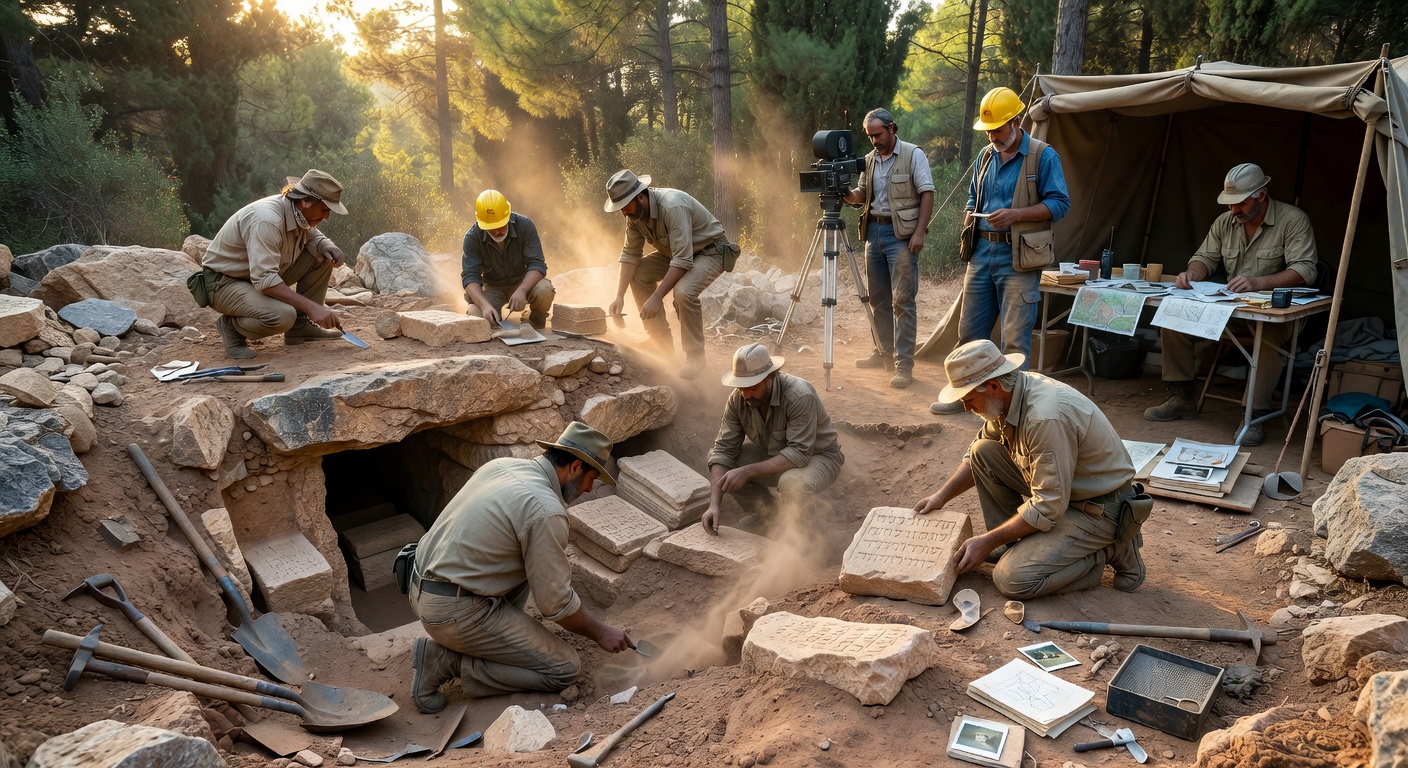
In November of 1990, construction workers paving a road in the Peace Forest south of Jerusalem’s Old City made an accidental discovery that would thrill biblical scholars and strengthen the faith of Christians around the world. A bulldozer broke through the roof of an ancient rock-hewn family tomb, revealing a burial cave from the time of Jesus. When the Israel Antiquities Authority arrived to excavate, they found twelve limestone ossuaries — bone boxes used in first-century Jewish secondary burial practices. One of them, ornately decorated and clearly belonging to a family of high status, carried two Aramaic inscriptions naming “Yehosef bar Qayafa” — Joseph, son of Caiaphas.
For the congregation of Victory Baptist Church in Carthage, Missouri, and for Bible-believing Christians throughout Jasper County and Southwest Missouri, this discovery is deeply meaningful. It provides one of the strongest extra-biblical confirmations of a named figure who appears prominently in the Gospel accounts of Jesus’ trial and crucifixion. The Caiaphas Ossuary does not merely prove that a man named Caiaphas existed; it places us in the very room where the religious leaders of Jerusalem deliberated the fate of the Son of God.
The 1990 Discovery in Jerusalem’s Peace Forest
Accidental Find During Road Construction
The tomb was located in an area known as the Peace Forest, just south of the Old City near what is today the North Talpiot neighborhood. Archaeologists Zvi Greenhut of the Israel Antiquities Authority and Ronny Reich, who studied the inscriptions, conducted a careful salvage excavation. The cave was a typical loculi tomb of the late Second Temple period, with four burial niches cut into the rock. Inside were twelve ossuaries, six of which showed signs of having been disturbed in antiquity or more recently.
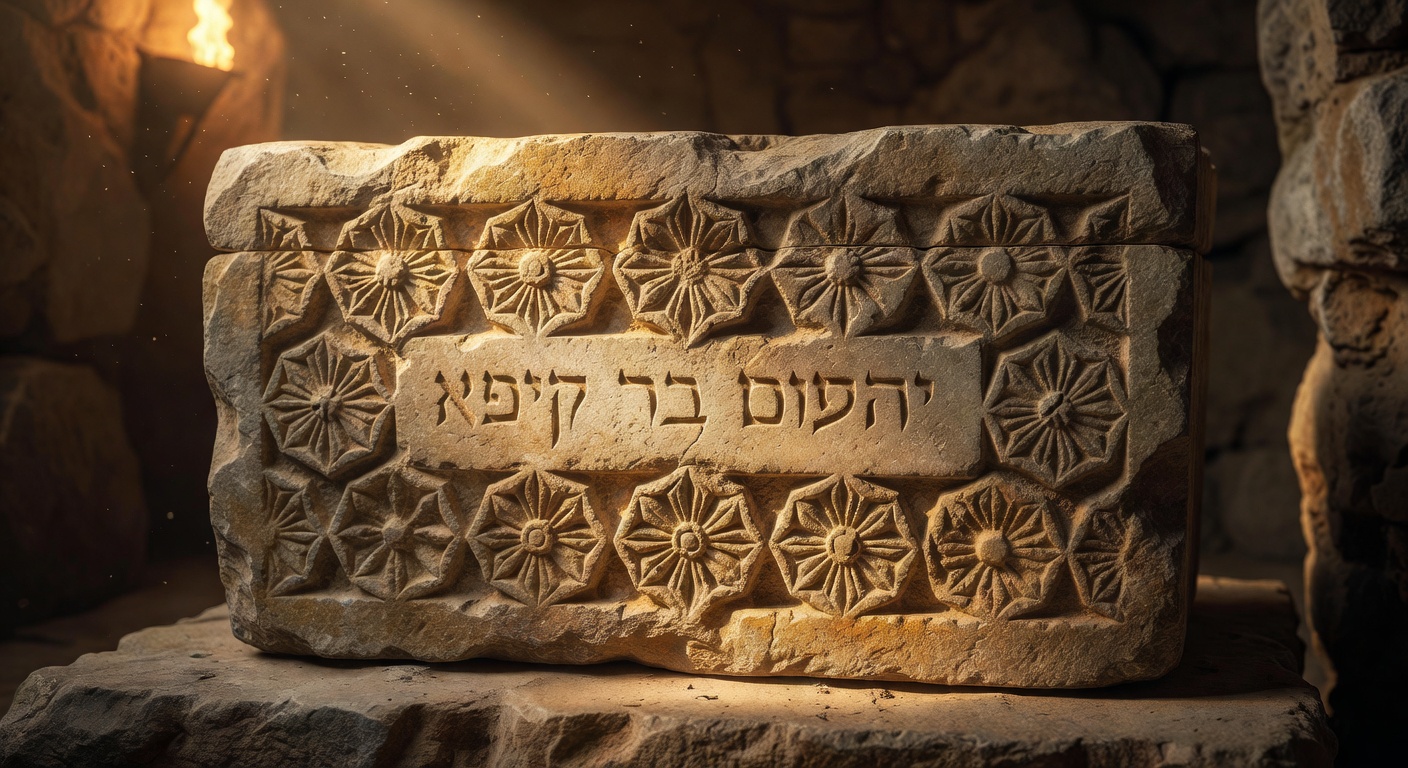
Among the ossuaries, one stood out for its size, decoration, and inscriptions. Measuring approximately 75 centimeters long and 37 centimeters high, the limestone box was adorned with beautifully carved rosettes and still bore traces of bright orange paint — signs of wealth and care in its original preparation. On one of the long sides was written in clear Aramaic letters “Yehosef bar Qayafa.” On a narrow end appeared the shorter form “Yehosef bar Qafa.”
The bones inside this particular ossuary belonged to six individuals: a man approximately sixty years old, a woman, two teenage boys, and two infants. The sixty-year-old male is widely regarded by scholars as the most likely candidate for the biblical Caiaphas himself or a very close family member. Given that Caiaphas served as High Priest from around A.D. 18 until A.D. 36 or 37, a man of that age in the mid-first century fits the timeline perfectly.
Here at Victory Baptist Church in Carthage, Missouri, we often remind one another that archaeology is not our savior — Jesus is. Yet when the stones of the Holy Land cry out in agreement with the Scriptures we preach from our pulpit every Sunday, our hearts are encouraged. The same God who preserved the record of Caiaphas in the pages of the New Testament also preserved this stone box for modern eyes to see.
The Ossuary and the Inscription That Bears His Name
The Aramaic Inscription “Yehosef bar Qayafa”
Ossuaries were commonly used by Jewish families in Jerusalem during the first century before the destruction of the Temple in A.D. 70. After a body decomposed in a loculus niche, the bones were collected and placed in a decorated stone box for permanent secondary burial. The practice was especially common among wealthier families who could afford fine limestone boxes carved with rosettes, geometric designs, and occasionally inscriptions.
The Caiaphas ossuary is among the more elaborate examples known from this period. Its decoration and the quality of the stone speak of a prominent priestly family with significant resources and social standing — exactly what we would expect for the household of the High Priest.
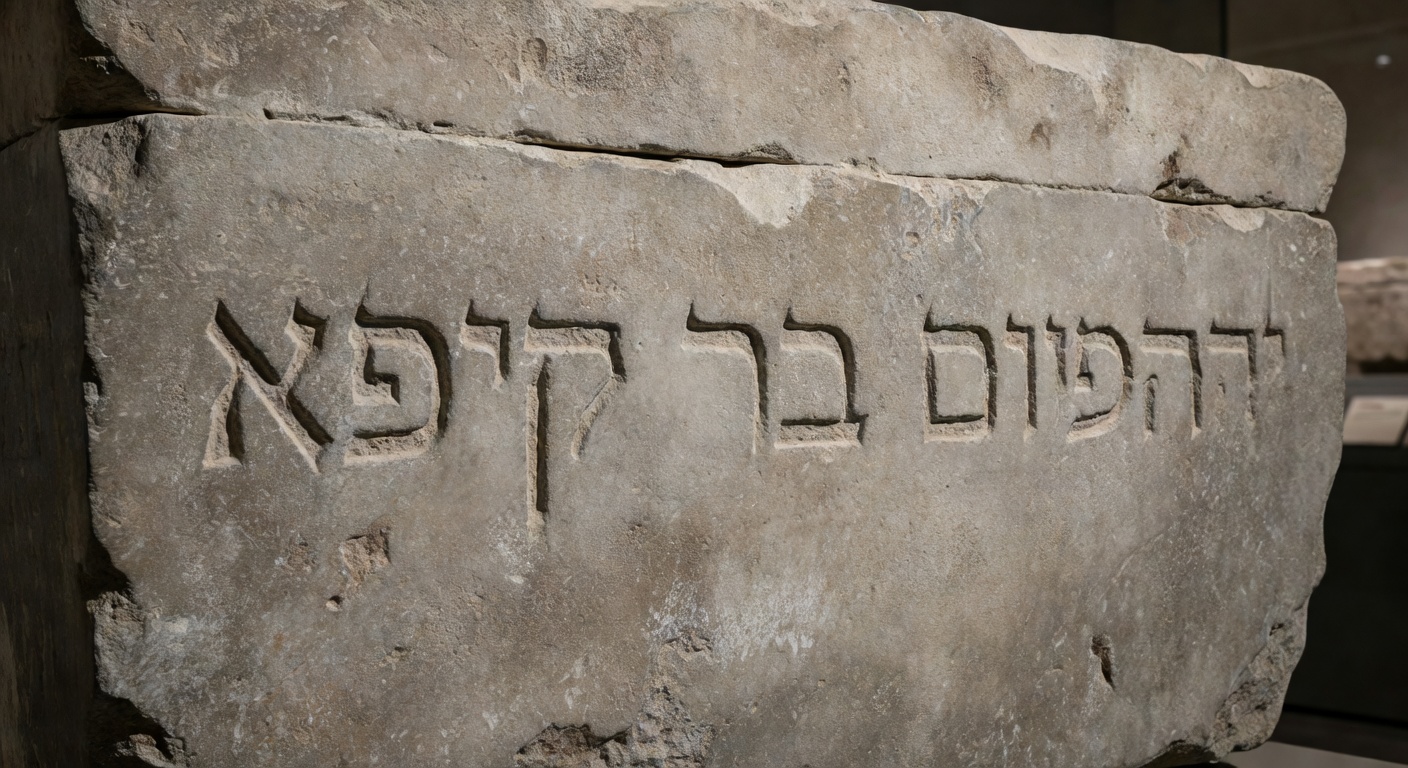
The name “Caiaphas” appears to have functioned as a family or clan name rather than a personal name alone. Josephus, the first-century Jewish historian, refers to the High Priest as “Joseph who was called Caiaphas.” The ossuary inscription matches this usage precisely. While the box does not explicitly say “High Priest,” the combination of the rare name, the ornate quality of the ossuary, the location of the tomb in an elite Jerusalem burial area, and the dating all align powerfully with the biblical and historical Caiaphas.
In 2011, another ossuary bearing the Caiaphas family name surfaced from the antiquities market and was authenticated by experts. It reads in part “Miriam daughter of Yeshua son of Caiaphas, priest of Ma’aziah from Beth ‘Imri.” This find links the family to one of the twenty-four priestly divisions established by King David and recorded in 1 Chronicles 24. The connection between the Caiaphas of the Gospels and a known priestly lineage is now even stronger.
Caiaphas in the New Testament and Josephus
The Gospels introduce us to Caiaphas by name and by office. In Matthew 26:3 we read, “Then the chief priests and the elders of the people gathered in the palace of the high priest, whose name was Caiaphas.” He is identified as the High Priest who, together with his father-in-law Annas, exercised significant power during the final years of Jesus’ earthly ministry and throughout the events leading to the crucifixion.
The Gospel of John provides additional theological insight. In John 11:49-52, Caiaphas declares to the Sanhedrin, “You know nothing at all. Nor do you understand that it is better for you that one man should die for the people, not that the whole nation should perish.” The apostle John notes that Caiaphas did not say this of his own accord, but as High Priest he prophesied that Jesus would die for the nation — and not for the nation only, but to gather into one the children of God who are scattered abroad.
“And they led him to Caiaphas the high priest, where the scribes and the elders had gathered.” — Matthew 26:57
Josephus confirms the historical Caiaphas in his Antiquities of the Jews. He records that Caiaphas, whose full name was Joseph son of Caiaphas, was appointed High Priest by the Roman prefect Valerius Gratus around A.D. 18 and served until he was deposed by Lucius Vitellius in A.D. 36 or 37. He was the son-in-law of Annas, who had previously held the office and continued to wield influence behind the scenes. This matches the New Testament portrait exactly.
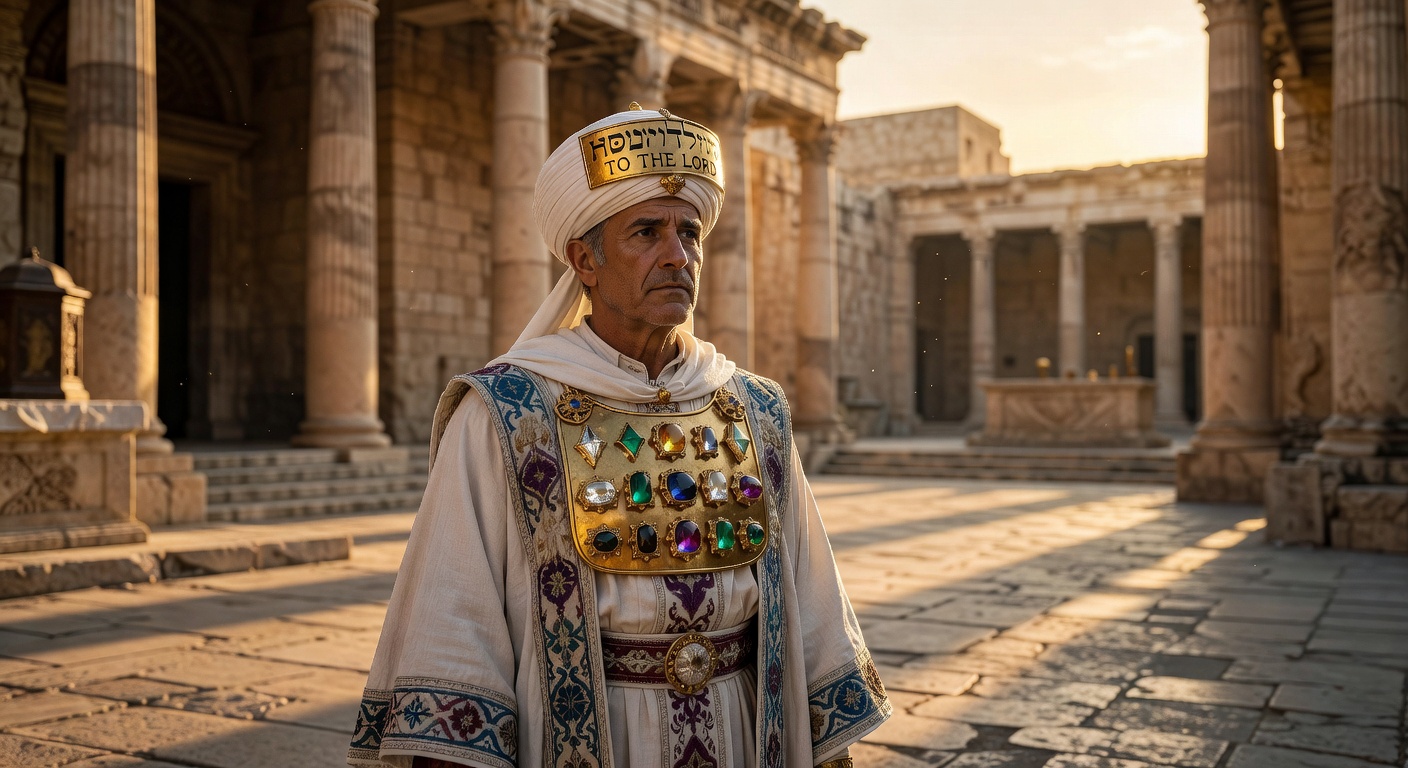
At Victory Baptist Church in Carthage, Missouri, we preach through the Gospels verse by verse. When we reach the passion narratives, the Caiaphas Ossuary gives our people a concrete picture of the man who sat in judgment over Jesus. It removes any notion that the trial accounts are later legendary inventions. The High Priest named in Scripture was a real historical figure whose family tomb has now been found.
The Night Jesus Stood Before Caiaphas
The Gospels give us a sobering account of the events in Caiaphas’ house. After soldiers arrested Jesus in Gethsemane, they took Him first to Annas and then to Caiaphas. The Sanhedrin—the highest Jewish council—had gathered, even in the middle of the night. Therefore the council brought forward false witnesses. Jesus remained largely silent until Caiaphas placed Him under oath: “I adjure you by the living God, tell us if you are the Christ, the Son of God” (Matthew 26:63).
The Midnight Arrest and the Council’s Gathering
Jesus answered with the words that sealed His fate in the eyes of the council: “You have said so. But I tell you, from now on you will see the Son of Man seated at the right hand of Power and coming on the clouds of heaven.” Caiaphas tore his robes in a dramatic display of outrage and declared the charge of blasphemy. The council condemned Jesus to death.
Of course, only the Romans could carry out capital punishment. By morning, Jesus stood before Pontius Pilate. In addition, it was Caiaphas and the religious leadership who had orchestrated the events that led to the cross. The very man whose name is etched on this ossuary played a central role in the greatest injustice in human history — an injustice God sovereignly used to accomplish our redemption.
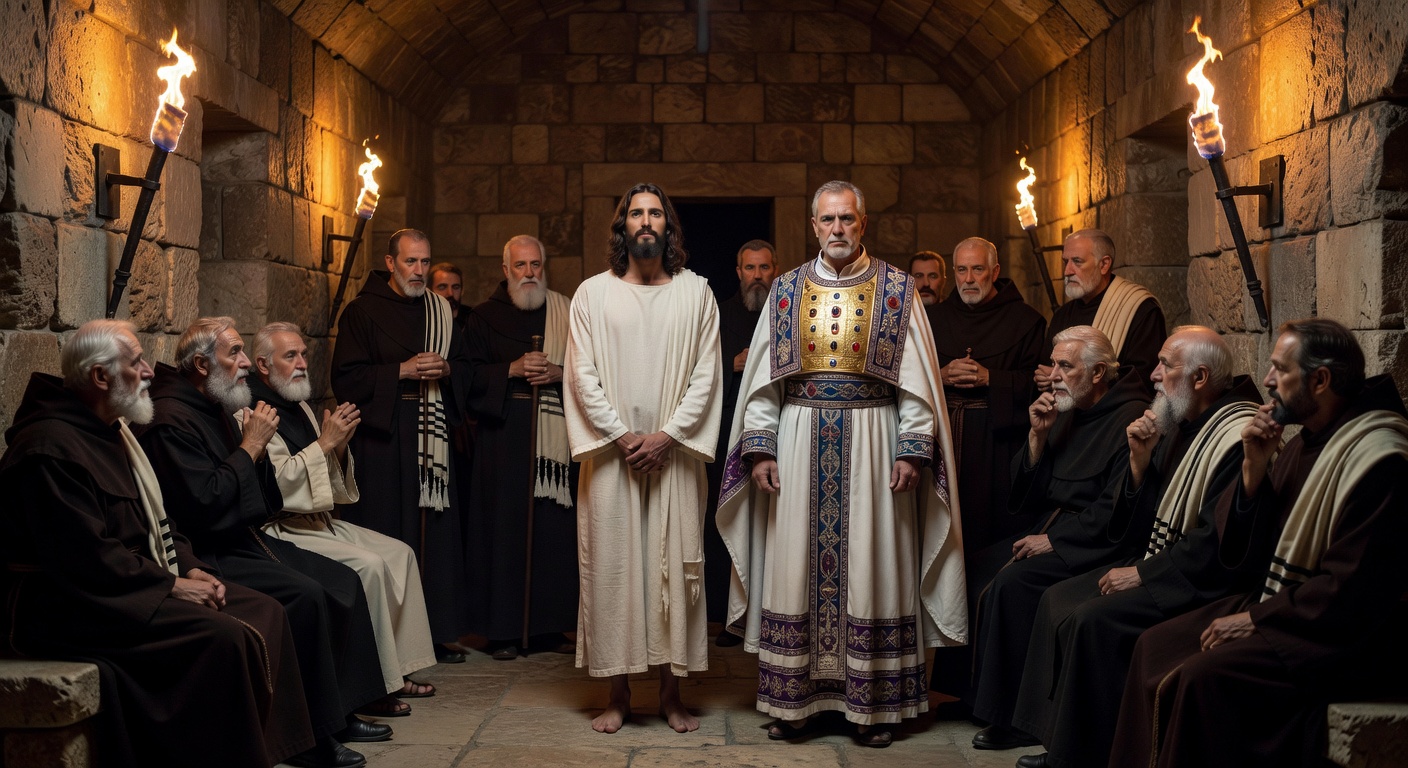
For the people of our church family in Jasper County, these scenes are not distant ancient history. They are the very foundation of our hope. The High Priest who condemned Jesus did not realize that he was fulfilling prophecy and advancing the plan of salvation. The bones that once rested in that ornate ossuary belonged to a man who unknowingly participated in the greatest act of love the world has ever known.
Scholarly Consensus and the Strength of the Evidence
Authenticity and Identification Debate
Unlike some controversial artifacts that have appeared on the antiquities market without clear provenance, the Caiaphas Ossuary was discovered in a controlled archaeological excavation with impeccable documentation. The Israel Antiquities Authority oversaw every step. There has never been a serious scholarly challenge to its authenticity or first-century dating.
Debate centers not on whether the ossuary is genuine, but on whether the sixty-year-old man whose bones it contained was precisely the High Priest Caiaphas of the Gospels or another member of the same prominent family. The absence of the title “High Priest” on the inscription leaves a small measure of uncertainty. However, the overwhelming majority of archaeologists and New Testament scholars accept the identification as highly probable. The name is rare, the social status matches, the location and date are perfect, and supporting evidence from the 2011 ossuary strengthens the family identification.
This stands in contrast to artifacts whose authenticity remains disputed. The Caiaphas Ossuary is routinely cited in scholarly literature as one of the most significant archaeological confirmations of a New Testament personality. It joins the Pilate Stone, the Erastus inscription, the Gallio inscription, and other finds that anchor the biblical narrative in the real world of the first century.
Why the Caiaphas Ossuary Matters to Believers in Carthage, Missouri
Why should a limestone box discovered in Jerusalem in 1990 matter to farmers, teachers, nurses, retirees, and young families worshiping at Victory Baptist Church in Carthage, Missouri? Because our faith is not built on myths or moral fables. It is built on the historical reality that Jesus of Nazareth was truly tried, crucified, buried, and raised from the dead in first-century Judea under the governorship of Pontius Pilate and during the high priesthood of Caiaphas.
When we sing “The Old Rugged Cross” or “How Deep the Father’s Love for Us” on Sunday mornings in our sanctuary in Jasper County, we are singing about events that actually happened. The Caiaphas Ossuary helps our children and our new believers see that the Bible’s story is not a fairy tale. The man who led the charge against Jesus was a real public figure whose family name and burial practices have now been recovered from the dust of history.
In a culture that increasingly questions the reliability of Scripture, the young people growing up in Southwest Missouri need every reason to trust the Word of God. Archaeology will never replace the work of the Holy Spirit in bringing conviction, but God in His kindness has allowed the earth itself to bear witness. The same God who preserved the bones of Caiaphas’ family also preserved the message of the gospel so that it could reach even the small towns and rural communities of Jasper County, Missouri, two thousand years later.
Every time we open our Bibles to the passion narratives, we can picture the actual man whose name appears on this ossuary. We can remember that the trial was not a secret event hidden from history. It took place in the public eye of Jerusalem, and the very stones have now testified to the identity of the one who led it.
The Greater Story: From Condemnation to Resurrection
Caiaphas could never have imagined that the man he condemned would rise from the dead three days later. He could not have foreseen that the cross he helped arrange would become the means by which sinners from every nation — including believers in Carthage, Missouri — would be forgiven and reconciled to God.
The apostle Peter, who stood in that courtyard and later preached on the day of Pentecost, declared in Acts 2 that Jesus was “delivered up according to the definite plan and foreknowledge of God.” Caiaphas was a willing participant in the evil that took place that night, yet God sovereignly used it to accomplish the salvation of His people.
This is the message we proclaim at Victory Baptist Church every week: the tomb that held the bones of Caiaphas’ family is empty of power compared to the empty tomb of Jesus. The High Priest who once sat in judgment now stands before the judgment seat of the very One he condemned. And that same risen Lord offers grace and forgiveness to anyone who will repent and believe — whether in first-century Jerusalem or twenty-first-century Jasper County.
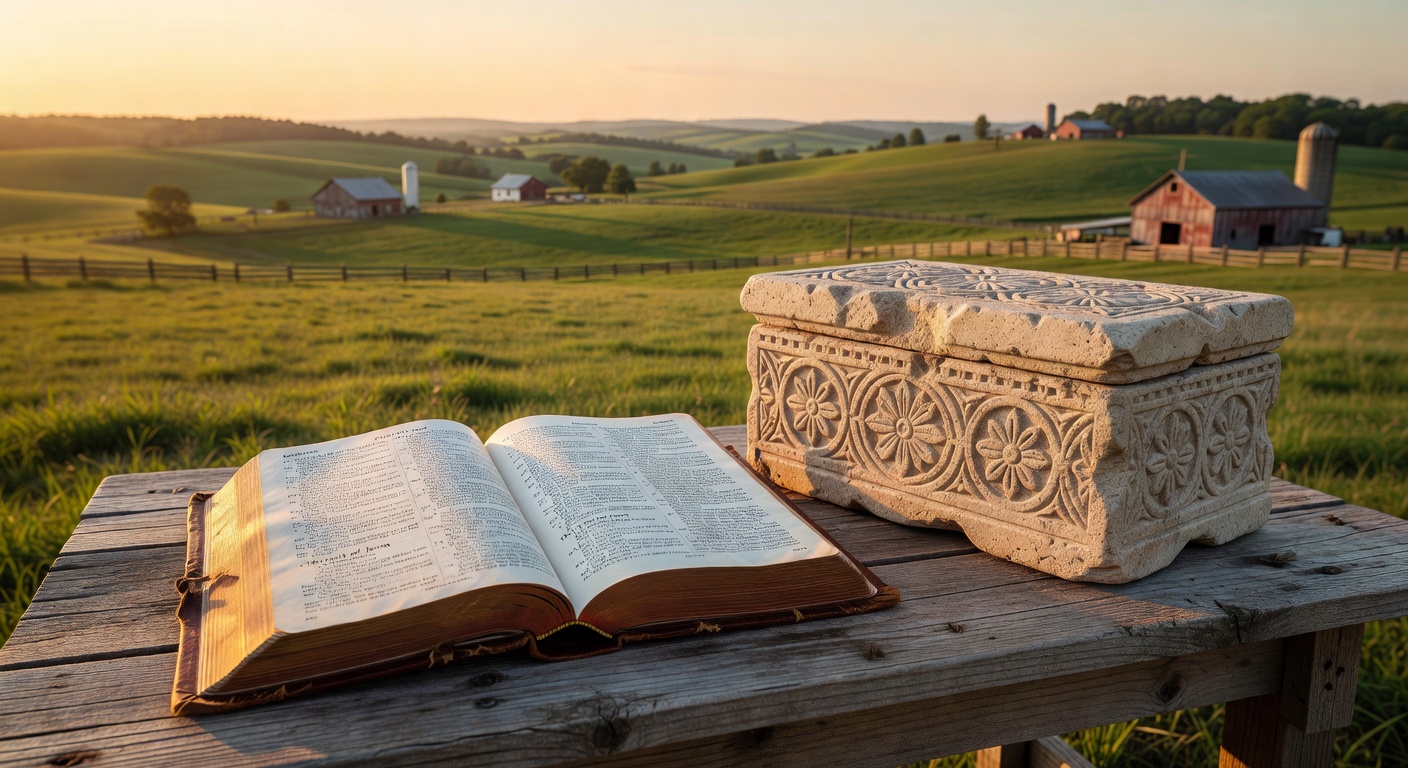
The Caiaphas Ossuary ultimately points us beyond itself to the living Lord. It confirms the setting. It authenticates the characters. But the power of the gospel is not in the stone — it is in the empty tomb and the ascended King who will one day return.
Studying the Evidence and Growing in Faith
If you are part of our church family or someone exploring the Christian faith in Southwest Missouri, we encourage you to study the Caiaphas Ossuary and other archaeological discoveries for yourself. Excellent resources are available from organizations dedicated to biblical archaeology that present the evidence with both scholarship and faith. Books, museum exhibits (the ossuary is displayed in the Israel Museum in Jerusalem), and reputable documentaries can deepen your confidence in the historical reliability of the New Testament.
At Victory Baptist Church in Carthage, our pastors and teachers are glad to discuss these matters. We do not place our ultimate trust in archaeology, but we thank God when the dirt of the Holy Land confirms what the Bible has always said. The Caiaphas Ossuary is one more reason we can say with the apostle Paul, “I know whom I have believed, and I am convinced that he is able to guard until that day what has been entrusted to me” (2 Timothy 1:12).
Whether you have walked with the Lord for decades in Jasper County or you are just beginning to ask questions about the reliability of Scripture, the message is the same: the Bible can be trusted. The events it records — including the trial before Caiaphas — happened in space and time. And the Savior who was condemned that night is alive today, ready to save all who come to Him in faith.
Explore More Biblical Archaeology at Victory Baptist Church
The Caiaphas Ossuary is one of several powerful archaeological witnesses that confirm the New Testament accounts. Studying these finds helps believers in Carthage, Missouri, Joplin, and across Jasper County and Southwest Missouri see that the Bible is rooted in real history. Here are other discoveries we explore together:
- The Pilate Stone — Archaeological proof of Pontius Pilate, the Roman governor at Jesus’ trial.
- The Dead Sea Scrolls — Ancient manuscripts that confirm the reliability of the Old Testament Scriptures.
- The Tel Dan Inscription — Extra-biblical evidence mentioning the “House of David.”
- Hezekiah’s Tunnel — A 2,700-year-old engineering marvel described in the Bible, discovered in Jerusalem.
For deeper study from scholars, read the Caiaphas Ossuary entry on Wikipedia and the original excavation reports published by the Israel Antiquities Authority in ‘Atiqot 21 (1992). These resources further illuminate the world of the New Testament.
Frequently Asked Questions About the Caiaphas Ossuary
What is the Caiaphas Ossuary and when was it discovered?
In November 1990, construction workers building a road in the Peace Forest south of Jerusalem’s Old City accidentally broke into an ancient family tomb. Archaeologists from the Israel Antiquities Authority excavated twelve limestone ossuaries. One ornately decorated bone box bore the Aramaic inscription “Yehosef bar Qayafa” — Joseph, son of Caiaphas — the name of the High Priest who presided over Jesus’ trial according to the New Testament.
How does the inscription on the Caiaphas Ossuary connect to the New Testament account of Jesus’ trial?
The Gospels record that Jesus was brought before Caiaphas, the high priest, and the Sanhedrin on the night before His crucifixion (Matthew 26). The ossuary inscription matches the family name of the very man Josephus and the New Testament identify as the high priest during that period. This gives tangible archaeological support to the historical setting of the Passion narrative.
What is the scholarly consensus on whether this is the bone box of the biblical Caiaphas?
Most scholars accept the ossuary as authentic first-century evidence of a prominent priestly family bearing the name Caiaphas. While the inscription does not explicitly say “High Priest,” the combination of the name, the high-status tomb, and the historical timing makes a strong case that the bones belonged to the Caiaphas (or a close family member) mentioned in the Bible. There has never been a serious challenge to its dating or authenticity.
How can the discovery of the Caiaphas Ossuary strengthen faith for believers in Carthage, Missouri, Jasper County, and Southwest Missouri today?
At Victory Baptist Church in Carthage, we believe the Bible records real events that happened to real people in real places. The Caiaphas Ossuary is one more piece of evidence that the trial, crucifixion, and resurrection of Jesus occurred in verifiable history. When we gather on Sunday mornings in Jasper County, we are worshiping the risen Savior whose story is anchored in the same first-century world this stone box came from.
Come Worship With Us at Victory Baptist Church in Carthage, Missouri
We warmly invite you to join us this Sunday at Victory Baptist Church in Carthage, Missouri. You will find a welcoming, Bible-believing family of believers who love the Lord, love His Word, and love the people of Jasper County and all of Southwest Missouri. Whether you are wrestling with questions about the historical reliability of the Gospels or simply looking for a church home where Jesus Christ is exalted and the gospel is preached with clarity and conviction, you are welcome here.
The Caiaphas Ossuary is a stone that speaks. It tells us that the High Priest named in the Gospels was real. But the living Word of God speaks with even greater power: “For our sake he made him to be sin who knew no sin, so that in him we might become the righteousness of God” (2 Corinthians 5:21).
Come hear that message with us. The God who worked through the events of that long-ago night in Jerusalem is still calling sinners to Himself through the finished work of His Son. At Victory Baptist Church in Carthage, we are honored to proclaim the good news of Jesus Christ week after week in Jasper County, Missouri.
Victory Baptist Church
Carthage, Missouri
Jasper County, Southwest Missouri
Preaching the Word • Exalting Christ • Loving Our Community