Blessed Be Your Name: The Story Behind the Song
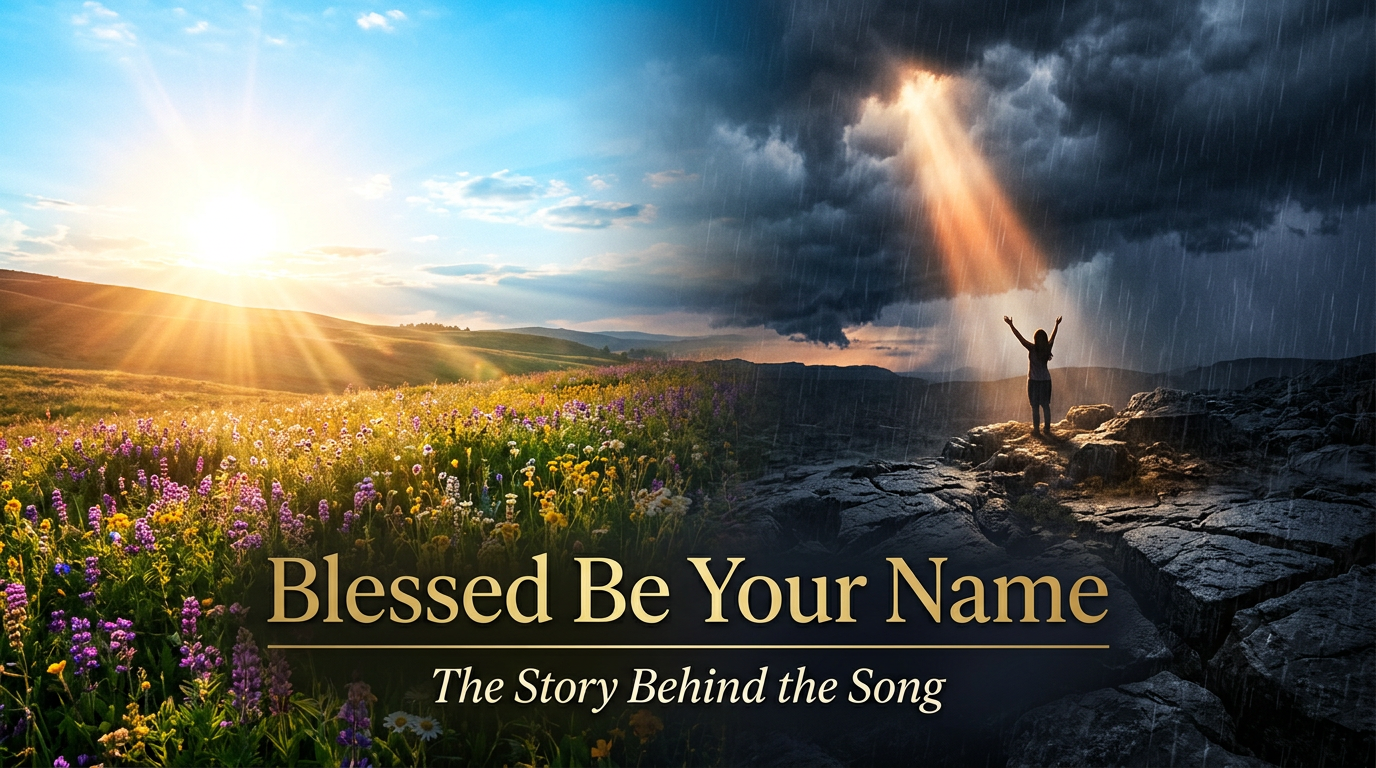
Blessed Be Your Name: The Story Behind the Song
How Matt and Beth Redman wrote one of the most beloved worship anthems of the 21st century in the ash-filled days following September 11, 2001 — and why it continues to give millions of believers a voice in their darkest moments
Introduction: A Song Born from the Ashes
On September 11, 2001, two airplanes hit the Twin Towers in New York City, and the world changed. Within days, churches across America were overflowing. People who had not stepped inside a sanctuary in years returned, searching for something — comfort, answers, meaning, or simply a place to grieve. Pastors rose to the moment with some of the finest preaching many of their congregations had ever heard. But Matt Redman noticed something else: the songs weren’t there.
Visiting church after church in the weeks following the attacks, the British worship leader and his wife Beth found themselves in congregations that had powerful biblical preaching but an almost total absence of worship songs equipped to respond to pain, lament, and grief. There were plenty of songs for seasons of joy. There were almost none for the road marked with suffering. That absence — that silence where a song should have been — is what gave birth to “Blessed Be Your Name.”
More than two decades later, “Blessed Be Your Name” remains one of the most sung worship songs in the world. It won the GMA Dove Award for Worship Song of the Year. It spent 68 weeks on the Billboard Christian Songs chart. It has been recorded by dozens of artists including Tree63, Newsboys, Michael W. Smith, and countless church worship bands. And it continues to be the song that millions of Christians reach for when life falls apart — because it was written specifically for that moment.
Matt Redman: The Man Behind the Music
To understand “Blessed Be Your Name,” you have to understand the man who wrote it — and that story begins not with triumph, but with tragedy.
Matthew James Redman was born on February 14, 1974, in England. When he was just seven years old, his father took his own life. The loss was devastating. But in the months that followed, a group from America visited the family, bringing with them a vibrant, expressive form of worship music that Matt had never encountered before. In the midst of profound grief, worship became a lifeline. “I learnt early on,” Redman later recalled, “that when you come to the throne room of God it’s not only a place of reverence — it’s a place of refuge.”
At age ten, Matt attended a Luis Palau Mission to London gathering in 1984 and converted to Christianity. The music that had comforted him in childhood became his calling. Encouraged by youth leader Mike Pilavachi at St. Andrew’s Chorleywood, he began leading worship as a teenager. By twenty, he was recording his first album. In 1993, he co-founded Soul Survivor with Pilavachi — a global Christian movement and annual music festival aimed at young people — which would become one of the most influential youth worship gatherings in the world.
Matt is married to Beth Redman, a gifted songwriter and author in her own right. Together, they have five children and live in southern California. Beth is the co-writer of “Blessed Be Your Name,” co-author of the books God Knows My Name and Finding God in Hard Times, and a Dove Award winner in her own right. “Blessed Be Your Name” would not exist without her voice and her partnership.
To date, Matt Redman has released 16 albums, written 8 books, won 13 Dove Awards (including Songwriter of the Year in 2013), and earned two Grammy Awards for his 2011 song “10,000 Reasons (Bless the Lord).” Three of his albums have reached No. 1 on Billboard’s Christian album chart. His songs have been covered by Michael W. Smith, Chris Tomlin, Jeremy Camp, Rebecca St. James, Tasha Cobbs Leonard, and Natasha Bedingfield, among dozens of others. He has performed at Madison Square Garden, Wembley Stadium, and the Royal Albert Hall. He has led worship in South Africa, Japan, India, Australia, and the Czech Republic.
But of all the songs in his catalog, none has reached as many people in as many different circumstances as “Blessed Be Your Name.” It is the song most closely identified with his name — and the song most clearly born from his own story.
The Origin Story: September 2001
On September 15, 2001 — just four days after the 9/11 attacks — Matt and Beth Redman flew into Los Angeles to begin a planned sabbatical break in California. In his own words, from his book Blessed Be Your Name:
“Four days earlier we’d watched with the rest of the world, gripped by those terrible, nation-shaking events of 9/11. Over the next few days and weeks in the U.S., as we watched the news, talked with neighbors and visited many different churches, the full effect of the terrorist attacks began to unfold before us. Brokenness was everywhere, and many people sought some kind of comfort in the church.”
Redman was moved by the quality of the preaching he encountered. Pastors throughout the country delivered what he described as “biblical and powerful sermons,” speaking directly into the pain of a shocked nation with clarity and compassion. But something was noticeably absent. As he traveled from church to church — sometimes as a visitor, sometimes as a worship leader — a “worrying question” began to form:
“Where were the songwriters at such a time as this? Where were the musical poets and prophets to help the people of God find a voice in worship at this tragic time? The truth was, in most places we visited, there was a distinct lack of songs appropriate for this time. As songwriters and lead worshipers, we had a few expressions of hope at our disposal; but when it came to expressions of pain and lament, we had very little vocabulary to give voice to our heart cries.”
In an article for Today’s Christian magazine, writer Lindsay Terry documented what happened next. Matt turned to the one biblical voice he knew had faced total devastation and still chosen to worship: Job. In the first chapter of the Book of Job, a man loses his children, his servants, his livestock, and his property — all in a single day. His response is extraordinary:
“Then Job arose and tore his robe and shaved his head and fell on the ground and worshiped. And he said, ‘Naked I came from my mother’s womb, and naked shall I return. The LORD gave, and the LORD has taken away; blessed be the name of the LORD.'” — Job 1:20–21
Redman was gripped by that response. Not merely acceptance. Not resignation. Worship. In the middle of catastrophic loss, Job did not curse God, did not withdraw from God, did not demand explanations from God. He tore his robe, shaved his head, fell to the ground — and worshipped. “Blessed Be Your Name” was written as a musical companion to that ancient act of faith.
The song was completed in the weeks following 9/11 and recorded for Matt’s 2002 album Where Angels Fear to Tread, released on the Worship Together label. Track two. Five minutes and six seconds. A song that would take two more years to fully find its audience — but when it did, it spread like fire.
Lyrical Analysis: A Song for Every Season
“Blessed Be Your Name” is structured around a simple but profound theological framework: praise is not contingent on circumstances. The song moves through four contrasting scenarios — two seasons of blessing and two seasons of suffering — and asserts in each one that God deserves worship regardless of which season the singer currently inhabits. Here is a verse-by-verse analysis.
Verse 1 — The Land That Is Plentiful
Blessed be Your name
In the land that is plentiful
Where Your streams of abundance flow
Blessed be Your name
The song opens in a good season — abundance, provision, streams of blessing. The imagery draws from Deuteronomy 8:7–8, where God promises Israel a land of streams and abundance. But notice that even here, in the easiest and most natural place to offer praise, the song is deliberate and intentional. “Blessed be Your name” is not a passive acknowledgment of good fortune. It is an active choice to direct gratitude toward God rather than hoarding it or attributing it to one’s own effort. Even in abundance, the posture of the heart matters.
Verse 2 — The Desert Place
Blessed be Your name
When I’m found in the desert place
Though I walk through the wilderness
Blessed be Your name
The second verse mirrors the first with deliberate contrast. The “desert place” and “wilderness” are not merely metaphors — they are the biblical images of spiritual desolation, testing, and the absence of easy answers. Israel wandered the wilderness for forty years. Jesus was led there by the Spirit before beginning His ministry. The great heroes of faith all knew the desert. This verse does not say “Blessed be Your name because the desert is secretly a blessing.” It says: even here, even now, even in this — I will bless Your name. The contrast between verses one and two is the entire gospel in miniature: God is worthy of praise in both seasons, and the choice to praise in the desert is the more courageous and the more transformative act.
Pre-Chorus — The Turn
Every blessing You pour out I’ll turn back to praise.
When the darkness closes in, Lord, still I will say…
These two lines are the hinge of the entire song. “I’ll turn back to praise” is a posture of constant redirection — every good thing received is consciously redirected back to God as an act of gratitude rather than being absorbed into self-satisfaction. And the second line makes the harder commitment: even when “the darkness closes in,” the choice to say “Blessed be Your name” remains. This is not emotional manipulation or forced positivity. It is a theological choice: God’s worthiness is not determined by current circumstances.
Verse 3 — The Sun and the Suffering
Blessed be Your name
When the sun’s shining down on me,
When the world’s all as it should be,
Blessed be Your name.
Blessed be Your name
On the road marked with suffering,
Though there’s pain in the offering,
Blessed be Your name.
The third verse brings the contrast into its sharpest focus. “When the world’s all as it should be” — the easy days, the untroubled mornings, the seasons of health and wholeness. And then immediately: “on the road marked with suffering.” The phrase “though there’s pain in the offering” is particularly striking. It does not pretend that worship in suffering is painless. It acknowledges that this kind of praise costs something. It is a sacrifice of praise (Hebrews 13:15) — an offering that involves real cost, real grief, and real faith offered simultaneously.
The Bridge — The Core Theological Statement
You give and take away,
You give and take away.
My heart will choose to say:
Lord, blessed be Your name.
This bridge is where Job 1:21 becomes song. “The Lord gave, and the Lord has taken away; blessed be the name of the Lord.” Redman adds one crucial word that Job’s text implies but does not state: choose. “My heart will choose to say.” Worship in the dark is not an involuntary reflex. It is a decision. A conscious act of the will, aligned with the conviction that God is still good even when circumstances are not. Matt Redman himself has spoken about this word extensively: “Trust is a beautiful act of worship. It says to God, ‘I believe in You — in Your unfailing goodness and greatness — no matter what season of life I find myself in.'”
Timeline: The Life of a Song
| Year | Event |
|---|---|
| 1974 | Matt Redman born February 14 in England |
| 1981 | Matt’s father dies by suicide; worship becomes his place of refuge at age 7 |
| 1984 | Matt converts to Christianity at a Luis Palau Mission to London gathering, age 10 |
| 1993 | Co-founds Soul Survivor with Mike Pilavachi — a global youth worship movement |
| September 11, 2001 | 9/11 terrorist attacks; Matt and Beth fly to California September 15 for sabbatical |
| Late 2001 | “Blessed Be Your Name” written by Matt and Beth Redman in response to 9/11 and inspired by Job 1:21 |
| 2002 | Song recorded as track 2 on Where Angels Fear to Tread (Worship Together); album released January 1, 2002 |
| 2003 | South African band Tree63 releases cover as a single; begins climbing Billboard charts |
| 2004 | Tree63 version named No. 1 Adult Contemporary Christian radio single of the year by Billboard; peaks at No. 2 on Billboard Christian Songs chart; stays on chart 68 weeks. Newsboys cover the song for their Devotion album |
| 2005 | Wins GMA Dove Award for Worship Song of the Year. Included on WOW Hits 2005. Matt releases Blessed Be Your Name: The Songs of Matt Redman Vol. 1 compilation |
| 2008 | Tree63 includes the song on their greatest hits album Blessed Be Your Name: The Hits |
| 2011 | Matt releases “10,000 Reasons (Bless the Lord),” winning two Grammy Awards |
| 2013 | Matt wins 6 Dove Awards including Songwriter of the Year; recognized by Billboard as leading Christian artist |
| 2020 | Matt signs with Integrity Music; continues active recording and touring ministry |
| 2024 | Blessed Be Your Name: The Worship Songs of Matt Redman Vol. 1 re-released on Integrity Music |
Notable Recordings and Covers
| Artist | Year | Notable Achievement |
|---|---|---|
| Matt & Beth Redman | 2002 | Original recording on Where Angels Fear to Tread (Worship Together) |
| Tree63 | 2003–2004 | Cover peaked No. 2 Billboard Christian Songs; spent 68 weeks on chart; No. 1 AC Christian song of 2004 |
| Newsboys | 2004 | Recorded for Devotion album; introduced to rock/pop CCM audience |
| Michael W. Smith | 2005+ | Live performances reached broad evangelical audiences |
| Various Artists | 2005 | Included on WOW Hits 2005 — one of the best-selling Christian compilation series |
| Matt Redman | 2014 | Re-released with official lyric video (Survivor Records/Sparrow Records) |
| Church worship bands worldwide | Ongoing | One of the most consistently performed songs in CCLI licensing reports globally |
The Theology of Suffering and Praise
One of the reasons “Blessed Be Your Name” has endured — and one of the reasons it connects so deeply in moments of personal pain — is that it takes suffering seriously as a theological category rather than explaining it away.
Many worship songs, particularly in the contemporary CCM tradition, deal primarily with victory, breakthrough, and the joy of salvation. These are genuine and important themes. But they leave the congregation without a voice in seasons of loss, illness, grief, and unanswered prayer. “Blessed Be Your Name” provides that voice without offering false comfort. It does not say “God will fix this.” It does not say “This isn’t really that bad.” It does not even say “Everything happens for a reason.” It says something far more radical: in the middle of what cannot be explained and may never be resolved, God is still worthy of worship.
Matt Redman himself has articulated the theological heart of the song clearly: “I think the Book of Job is really about something much grander than suffering — it’s about the sovereignty of God, of which suffering is a subcategory. At the end of chapter one it says: ‘The Lord gave and the Lord has taken away. May the name of the Lord be praised.’ Trust is a beautiful act of worship. It says to God, ‘I believe in You — in Your unfailing goodness and greatness — no matter what season of life I find myself in.'”
The Gospel Coalition’s Ray Ortlund has written extensively about Job 1:21, noting that Job “did not say ‘Blessed be the Lord’ but ‘Blessed be the name of the Lord.'” At issue, Ortlund observes, is not only Job’s personal reverence for God but “the name of the Lord in the world — how God would be thought about and spoken about and felt about.” Job’s response was not merely private endurance. It was a public act of witness: in the worst moment of his life, he declared that God had done nothing wrong. That declaration is what “Blessed Be Your Name” carries into congregational worship — the same bold, costly, countercultural witness.
Why This Song Still Matters
More than two decades after it was written in the shadow of the greatest terrorist attack in American history, “Blessed Be Your Name” continues to be sung in churches around the world. It is pulled out during cancer diagnoses and at memorial services. It is sung at mission conferences and in hospital rooms. It appears at youth events and at funerals. It is among the first songs a new worship leader learns and among the last songs a grieving congregation sings at a closing service.
The reason is simple: suffering never goes out of season. Every generation encounters its version of the road marked with suffering. Every congregation includes people in the desert place alongside people in the land that is plentiful. “Blessed Be Your Name” is one of the few worship songs capacious enough to hold both realities simultaneously — to speak with equal truth to the person whose world is all as it should be and the person whose world has just collapsed.
And at the center of it all is that single, powerful word: choose. “My heart will choose to say: Lord, blessed be Your name.” Not “my heart feels like saying.” Not “my heart automatically says.” Not “my circumstances compel me to say.” Choose. Worship in the dark is a decision — and it is the most powerful theological act available to a human being in pain. It is the same decision Job made, tearing his robe and falling to the ground, declaring that the God who gave was also the God who took away, and that in both the giving and the taking, the name of the Lord was blessed.
That is what this song is. That is why it was written. And that is why — long after many worship songs of the same era have faded from memory — “Blessed Be Your Name” is still being sung.
Frequently Asked Questions
Who wrote “Blessed Be Your Name”?
“Blessed Be Your Name” was written by Matt Redman and his wife Beth Redman. It appears on Matt’s 2002 album Where Angels Fear to Tread, released on the Worship Together label.
What is “Blessed Be Your Name” about?
The song is about choosing to worship God in every season of life — both in times of blessing and in times of suffering. It is rooted in Job 1:21, where Job praises God even after losing everything. The central message is that God is worthy of praise regardless of circumstances.
What inspired “Blessed Be Your Name”?
The song was written in the weeks following the September 11, 2001 terrorist attacks. Matt and Beth Redman were in the United States on sabbatical and were struck by the absence of worship music that could respond to grief and suffering. Inspired by the Book of Job and the biblical call to praise God in all circumstances, they wrote the song as a direct response to that gap.
What Bible verse is “Blessed Be Your Name” based on?
The song is primarily based on Job 1:21: “The LORD gave, and the LORD has taken away; blessed be the name of the LORD.” The bridge of the song — “You give and take away / my heart will choose to say / Lord, blessed be Your name” — is nearly a direct paraphrase of this verse.
What awards did “Blessed Be Your Name” win?
The song won the GMA Dove Award for Worship Song of the Year in 2005. Tree63’s cover version was named the No. 1 Adult Contemporary Christian radio single of 2004 by Billboard magazine, and the song spent 68 weeks on the Billboard Christian Songs chart, peaking at No. 2.
Matt Redman (born February 14, 1974) is a British Christian worship leader, singer-songwriter, and author. He has released 16 albums, won 13 GMA Dove Awards, and earned two Grammy Awards for “10,000 Reasons (Bless the Lord).” “Blessed Be Your Name” was co-written with his wife Beth Redman and appears on the 2002 album Where Angels Fear to Tread (Worship Together / Integrity Music). © 2002 Thankyou Music (administered by worshiptogether.com songs).